23 January 2009

Miscellany

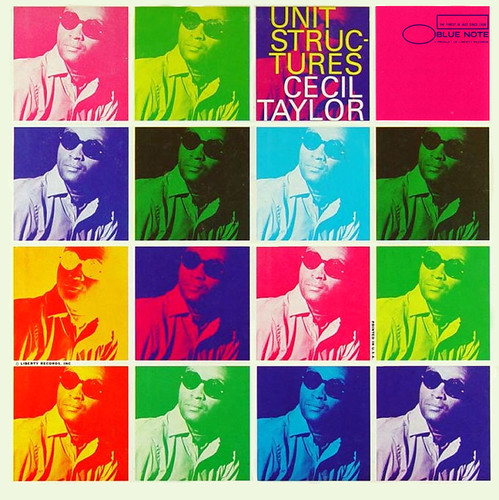
Nothing new, just links and an album cover (it is Friday, after all).

20 January 2009

On Booker Little and Jazz Mythology

Booker Little and Clifford Brown had much in common. Both were trumpet players from middling cities (Little from Memphis, Brown from Wilmington, Delaware) who played important roles in the development of jazz trumpet, but died before their thirtieth birthdays. Brown's and Little's solos are both studied and transcribed intently by young trumpet players. Both made impressive albums, both as a leader and a sideman, which are among the greatest jazz on record. Both were sidemen in Max Roach's quintet, and both built on the bebop trumpet style of Dizzy Gillespie and Fats Navarro.

Yet while Clifford Brown has been mythologized in The Jazz Tradition, Little remains a surprisingly obscure figure in the history of jazz, known mostly by musicians and aficionados. Why is this? It can't be because Little did not record enough masterpieces. Take a look at his discography, he appeared on Africa/Brass, Percussion Bitter Sweet, and Eric Dolphy's live recordings at The Five Spot. They may not be the most legendary recordings, but they are just as memorable and important to the development of jazz as any of the best Clifford Brown recordings. I would argue the same of Little's solo work, especially the well-regarded Out Front.

I wish I could come up with a better reason, but it seems to me that the answer largely has to do with timing and circumstance. Brown's heyday fits within a neat break in The Jazz Tradition. His first recording with Max Roach, Brown and Roach, Inc., was recorded in August 1954, just a few months before the death of Charlie Parker. Brown's ascent comes just as a the historical arc of jazz is in need of a protagonist. The same cannot be said for Little. Among his contemporaries were Ornette Coleman and John Coltrane, two figures who seemingly crowd out all other jazz musicians in some writers' retellings of the history of jazz between 1960 and 1963. Little seems to get lost in the background of jazz history.

But Clifford Brown is not just a lead player during one period of The Jazz Tradition, his personal story is also more easily mythologized. Because Charlie Parker's death stemmed from years of drug abuse, the clean cut image of Brown, who shunned drugs, smoking, and drinking, served as important story in jazz. Brown was kind of a corrective to the surprisingly-prevalent notion among jazz musiciansat the time that herion use contributed to creativity and performance (at least, according to some). This factor is also key in transforming Brown's life into myth; he is the opposite kind of fast-burning flame than Parker, and his story serves as a captivating next chapter following Bird's life and death. Ken Burns uses this dichotomy to much effect in his documentary Jazz.

So for having reasons little to do with their own music in some regard, perhaps, Brown can be mythologized into this jazz martyr, while Little is neglected by history. This fact in itself is an interesting critique of the mythologization of jazz inherent in The Jazz Tradition, and should inspire us to think beyond this master narrative when considering the history and development of jazz.

16 January 2009

Friday Album Cover: Talkin' About!

Grant Green
Talkin' About!

Blue Note's album catalog is so large that every so often I will come across an interesting album cover that I had never seen before. Such is the case with Grant Green's Talkin' About, which I did not know even existed until I saw it featured on Into the Rhythm this morning. The cover follows the traditional Blue Note motif (black-and-white photo, sans-serif text, minimalist theme), but adds a wrinkle with the album's title adding it to the album's song titles. This gives the cover kind of a vernacular feel to it, highlighting Green's bluesy aesthetic. The album also claims, "You'll be talkin' about it too!," a not-so-subtle endorsement reminiscent of Everybody Digs Bill Evans. All in all, the cover is a winner.

h/t: Into the Rhythm

15 January 2009

Must Read


Nat Hentoff writes about jazz, race, and civil rights in the Wall Street Journal today. Always an astute writer and observer, Hentoff is spot on when describing the influence of jazz musicians showing the potential of African American humanity and providing a forum for interracial social interaction. Had I stayed in grad school long enough to write a dissertation, Nat Hentoff is one of the first people I would have called for guidance on the relationship between jazz and American culture. My MA thesis was almost completely inspired by a 1960 article he wrote for Esquire on race relations and cultural possessiveness in the jazz community. His work remains some of my favorite jazz writing.

h/t: Jazz Beyond Jazz

Image via Wall Street Journal

List: 1959: Before and After

Being that 1959 saw the release of so many landmark jazz albums (Kind of Blue, Time Out, Giant Steps, The Shape of Jazz to Come, etc.), plenty of writers will be profiling the golden jubilees of all these albums throughout the year. But focusing on 1959 misses the point of that era. While 1959 was certainly a great year for jazz, the years surrounding 1959 all created their fair share of classics canonized in The Jazz Tradition. Since the late 1950s and early 1960s were a veritable golden age for jazz, when young lions like Coltrane and Coleman were reshaping the music while older stars like Ellington and Hawkins were still thriving, lets not limit ourselves to remembering 1959 as a watershed moment. Below are some great albums from 1958 and 1960 which are sometimes overshadowed by the weight of 1959.

A quick note: I am classifying these albums by the date they were recorded. Some were released the year after they were recorded, but the way things were changing in the jazz world at this time, a musician could sound much different over the space of a year (such is the case especially with John Coltrane).

1958:
  1. Bill Evans, Everybody Digs Bill Evans. Featuring an interesting album cover, Everybody Digs Bill Evans effectively introduced Evans to the jazz world just as he was to join Miles Davis' quintet at the piano chair.
  2. Cannonball Adderley, Somethin' Else. One of the classic hard bop records, Cannonball was joined by a veritable all-star band featuring Miles Davis, Art Blakey, Hank Jones, and Sam Jones. Adderley firmly established his reputation as a prominent figure in jazz with this record.
  3. Ornette Coleman, Something Else!!!!. One of the few albums in which Coleman used a piano player (Paul Bley in this case), Something Else introduced the world to Coleman before his infamous residency at New York's The Five Spot in 1959.
  4. Miles Davis, Porgy and Bess and Milestones. Porgy and Bess reinforced Miles' image as the biggest star in jazz, selling countless copies, while Milestones set the stage for 1959's Kind of Blue.
  5. Art Blakey & The Jazz Messengers, Moanin'. The title track was, in my estimation, the quintessential hard bop tune, the definitive example of the style I play when trying to explain what hard bop was.
  6. John Coltrane, Blue Train. Hard to believe Blue Note Records only got Coltrane in the studio as a leader once in his life.
  7. Sonny Rollins, Freedom Suite. Some say this is Rollins' best studio album. Hard to argue against that, but the album is also important for the brief liner notes written by Rollins which draw light to the status of African Americans in the land of the free.
1960:
  1. Miles Davis, Sketches of Spain. Though plenty of people will tell you that this is not really a jazz record, it nonetheless introduced jazz to a lot of people over the past five decades. I remember when I bought this album eight years at a music store in Toronto. When I paid for it, the cashier, a guy in a Slayer t-shirt with multiple piercings, simply said to me, "great album." This was not the kind of person you'd expect to make that comment.
  2. John Coltrane, My Favorite Things and Olé Coltrane. While My Favorite Things propelled Coltrane into stardom, Olé Coltrane is an underrated album in the Coltrane canon, featuring a young Freddie Hubbard in addition to the dueling basses of Reggie Workman and Art Davis.
  3. Ornette Coleman, Free Jazz. In which Ornette ups the ante and firmly opens Pandora's Box, cementing the enfant terrible reputation he began to earn with Something Else.
  4. Charles Mingus, Charles Mingus Presents Charles Mingus. The opening track, "Folk Forms No. 1," perfectly fuses the blues with improvised contrapuntal composition, while "Original Faubus Fables" unleashes Mingus' contempt for a segregationist Arkansas Govern0r Orval Faubus.
  5. Art Blakey & The Jazz Messengers, A Night in Tunisia and Roots & Herbs. Featuring one of the best editions of the Messengers (Lee Morgan, Wayne Shorter, Jymie Merritt, and Bobby Timmons), Blakey recorded a lot of albums in 1960. These two are my favorites of the bunch.
  6. Max Roach, We Insist! Max Roach's Freedom Now Suite. Featuring a photo of black college students at a sit-in, Roach's Freedom Now Suite presented a musical history of African Americans, featuring the vocals of Abbey Lincoln.
  7. Wes Montgomery, The Incredible Jazz Guitar of Wes Montgomery. Montgomery lays down some choice hard bop and shows all who care to listen that he is the guitar boss of the jazz community. His version of Airegin is my favorite recording of the Sonny Rollins standard.

UPDATE 1: The lists have already begun. Here's one from acompleteunknown at The Good, The Bad, and The Unknown. They've made some good choices, though I would replace Mingus' Ah Um with Blues and Roots, and would not have left off Giant Steps...

UPDATE 2: Kevin Kniestedt offers his thoughts on 1959 at Groove Notes.

Stats