
Happy 64th to Dave Holland.
Dave Holland 5tet from Eu2020 on Vimeo.
h/t: Donna
Showing posts with label Dave Holland. Show all posts
Showing posts with label Dave Holland. Show all posts
01 October 2010

25 July 2010
Sunday Morning
In case you missed it, Karen Michel interviewed Dave Holland yesterday for NPR's Weekend Edition yesterday. The story is worth the time, covering Holland's "discovery" by Miles Davis, his development as a bassist, and his mentoring of younger musicians.
I recently got my hands on Holland's new album, Pathways. I've enjoyed it both times I listened to it so far, but may not be returning to it too much. Not because the music isn't good. It is. I'm just not in a mood for an eight-piece ensemble at the moment. Regardless, the rendition of How's Never on the album is pure bliss, and Nate Smith is an absolute titan of a drummer, and when is Chris Potter ever boring? (hint: never). Holland has become such an institution in jazz that he can release a quality album like Pathways and I will take it for granted. You have to make some incredible music for a really long time to make that happen.
I recently got my hands on Holland's new album, Pathways. I've enjoyed it both times I listened to it so far, but may not be returning to it too much. Not because the music isn't good. It is. I'm just not in a mood for an eight-piece ensemble at the moment. Regardless, the rendition of How's Never on the album is pure bliss, and Nate Smith is an absolute titan of a drummer, and when is Chris Potter ever boring? (hint: never). Holland has become such an institution in jazz that he can release a quality album like Pathways and I will take it for granted. You have to make some incredible music for a really long time to make that happen.
26 March 2010
Friday Album Cover: Holland/Troxler
Dave Holland released his latest album, Pathways, this week, and had this to say about his cover art on his blog:
Always nice to hear an artist discuss cover art. Holland clearly believes as I do that interesting cover art adds to the experience of an album. After the jump is some of Troxler's recent cover art for Holland.
I have heard quite a few compliments about the distinctive cover art for my Dare2 releases. When I started the label, I knew I wanted my good friend, the world-famous graphic designer Niklaus Troxler, to do the artwork.
I first met Niklaus during the early 1970s. With the help of family and friends, he was organizing concerts in his hometown of Willisau, Switzerland—an activity that began because of his love of music. These would become the annual Jazz in Willisau festival. I immediately liked his directness and his positive energy, and discovered in him a wonderful sense of humor and intensity of purpose.
So many great images come to mind. Once, I was in Willisau to play a solo concert on a double bill with the Ron Carter Quartet. When we arrived at the hall, we were greeted by 20 large posters in a line across the entrance doors, each showing a lilac bass against a yellow background, with an arm at each shoulder of the bass playing the strings. On another occasion, a poster for a concert by Sam Rivers showed a pink fish jumping out of the bell of a tenor saxophone! Niklaus' posters are full of bold colors—Niklaus himself favors clothes with colors and combinations of equal intensity.
For the release of Pathways, in addition to a standard CD, we collaborated with Niklaus and Grammy-award winning package designer Susan Archie (Albert Ayler: Holy Ghost, Screamin' and Hollerin' the Blues: The Worlds of Charley Patton), to create a limited edition set (1,000 copies). This edition of Pathways comes in a 5" x 7" lidded box containing six postcard-sized reproductions of concert posters designed by Niklaus, including a poster commemorating the octet’s recording of Pathways live at Birdland in 2009. This set includes posters for concerts by Gateway, Anthony Braxton, Sam Rivers, and the double bill with Ron Carter mentioned above. The CD comes in a 4-panel folder decorated with Niklaus’ art, as well.
I hope you enjoy his art as much as I do—and don't forget to pay attention to the music!
Always nice to hear an artist discuss cover art. Holland clearly believes as I do that interesting cover art adds to the experience of an album. After the jump is some of Troxler's recent cover art for Holland.
15 March 2010
Ides of March

I'll go with the Ph. D. in astrophysics over the dude who may have been a plagiarist. Okay, he probably wrote those plays, but still...
- Last week at All About Jazz Frederick Bernas interviewed Christian Scott. Also interviewed at AAJ recently: Luis Bonilla and Robin DG Kelley.
- Peter Hum discovered a surprising entry in the Urban Dictionary earlier this month. He also pointed out some video from a Dave Holland master class.
- New Yorker classical critic and author of The Rest Is Noise Alex Ross has written a new book, Listen to This. Here's the table of contents. The book drops in September.
- Ethan Iverson on Wayne Shorter. If Do the Math is not on your RSS reader already, now you have no excuse.
- At Destination: Out this month: Max Roach + Archie Shepp = solid gold.
- Darcy James Argue is giving an in-depth analysis of some of his compositions on his blog. First up: Zeno, Parts 1 and 2, with more to come. I love it when artists nerd out on their blogs and Twitter feeds. Thanks Darcy.
Here is a live recording of the Secret Society playing Zeno at Le Poisson Rouge back in 2008:
24 February 2010
Dave Holland: A Latter Day Art Blakey

Art was driving to an out-of-town job and passed through a village where traffic was completely tied up because of a funeral procession. Since he couldn't get past the cemetery until the service was over, he got out and listened to the eulogy. The minister spoke at length about the virtues of the deceased, and then asked if anyone had anything else to add. After a silence during which nobody spoke up, Art said, "If nobody has anything to say about the deceased, I'd like to say a few words about jazz!"1Such was Blakey, always educating. And he is not the only musician who should be championed for his role as a bandstand professor. Dave Holland has served as a kind of Dean of Postbop for the past 30 years. His working bands, while they lack the brand name of Blakey's Messengers, have nonetheless served as a revolving door of talent which Holland nurtures. Like Blakey, Holland has an impressive record of graduates: Chris Potter, Steve Coleman, Eric Harland, and Kenny Wheeler, to name but a few.

But the analogy runs deeper than that. It is one thing to hire a bunch of up-and-coming sidemen, but quite another to let them develop as individuals while keeping your own stamp on the band at the same time. Holland and Blakey were both members of their respective rhythm sections; they could not be as overtly dominant as a front line player. Indeed, both men also recorded many original compositions written by their sidemen, and are remembered by their sidemen for their encouragement in contributing tunes to the book. But at the same time, the recorded outputs of Blakey and Holland each bear a distinctive sound. You know whose band is on the stand anytime either plays. It takes a special kind of musical leader to develop such a recognizable style with a continually changing cast of musicians passing through their bands.
Holland's recordings always seem to be well-received, but he has not quite reached the historical status of Blakey. Of course Blakey had the benefit of one of his sidemen acquiring an incredibly powerful position for mythmaking (ahem), but that's not territory I wish to cover here. Blakey also played during a time when stylistic categories within jazz were less complicated (it's much easier to approach a definition of hard bop than it is for postbop). However, if we can call the Jazz Messengers Hard Bop Academy, I think it's about time we start calling Holland's quintet the School for Postbop Studies.
Bonus material after the jump.
13 October 2009
Review: Overtone Quartet at The Kennedy Center
Dave Holland announced to the crowd at the Kennedy Center's Terrace Theater Saturday night that the Overtone Quartet is a collective operation. Each member contributes tunes for performance, and all four are given time in the spotlight. When a group consists of such powerful, diverse, and unselfish personalities as Holland, drummer Eric Harland, pianist Jason Moran, and saxophonist Chris Potter, this organizational model often pays dividends. I have mentioned before that Holland is very much a bandleader in the mode of Art Blakey: attracting talented young sidemen and creating an environment in which they can thrive.
And thrive they did on Saturday. The quartet opened with a Harland tune, Treachery. Harland set the tone for the evening with a driving rhythmic pulse, coupled with crisp accents that managed to pack a lot of notes into a little space without sounding clutter. He and Holland were locked in throughout most of the night; it was not uncommon for the two to smile to each other as they settled into a groove.
Indeed, the only disappointment of the evening was that we did not hear much from Moran, one of the most original voices on the piano at the moment. The quartet played one of Moran's tunes, Blue Blocks, and Moran only got two opportunities to stretch out by himself. However, complaining about this is a bit like complaining that you don't drive your Mercedes enough because you spend all your time in your BMW.
The group closed with Interception, from Holland's 1973 album Conference Of The Birds , one of the best jazz albums of that decade. The group tore through the tune's disjointed melody and followed with a frenetic free solo from Potter, with all three bandmates adding wind to his sails. Harland followed with a fantastic excursion of his own, befitting of the Superman t-shirt he wore under his jacket. It was a fitting end to the evening: four dynamic musicians forging their disparate identities into a beautiful cacophony.
Bonus Overtone: Nate Chinen reviews the quartet's September performance at the Blue Note in New York.
And thrive they did on Saturday. The quartet opened with a Harland tune, Treachery. Harland set the tone for the evening with a driving rhythmic pulse, coupled with crisp accents that managed to pack a lot of notes into a little space without sounding clutter. He and Holland were locked in throughout most of the night; it was not uncommon for the two to smile to each other as they settled into a groove.
Indeed, the only disappointment of the evening was that we did not hear much from Moran, one of the most original voices on the piano at the moment. The quartet played one of Moran's tunes, Blue Blocks, and Moran only got two opportunities to stretch out by himself. However, complaining about this is a bit like complaining that you don't drive your Mercedes enough because you spend all your time in your BMW.
The group closed with Interception, from Holland's 1973 album Conference Of The Birds
, one of the best jazz albums of that decade. The group tore through the tune's disjointed melody and followed with a frenetic free solo from Potter, with all three bandmates adding wind to his sails. Harland followed with a fantastic excursion of his own, befitting of the Superman t-shirt he wore under his jacket. It was a fitting end to the evening: four dynamic musicians forging their disparate identities into a beautiful cacophony.Bonus Overtone: Nate Chinen reviews the quartet's September performance at the Blue Note in New York.
16 September 2009
My Jazz Now

A Blog Supreme is running a series called Jazz Now, in which the ABS team and friends recommend five albums each from the past ten years to nascent jazz listeners. For a complete explanation of the project, go here. Patrick Jarenwattananon kicked things off with his five today, and asked for audience participation as well. So below are the five albums I would recommend to somebody looking to get into current jazz, in order of date released.
1. Dave Holland Quintet: Prime Directive
 (2000). Holland is the Art Blakey of the modern postbop scene, assembling an array of talented younger players to augment his bands, which have become a kind of graduate school in jazz performance.
2. Jason Moran: Modernistic
 (2002). Moran's reimagining of the James P. Johnson classic "You've Got to Be Modernistic" is worth the price of the disc alone. Moran has an uncanny ability of packing the entire history of jazz piano into his style while keeping it fresh and surprising the listener at every turn.
3. Happy Apple: Youth Oriented
 (2003). As I wrote in this space last year, Happy Apple expands the boundaries of jazz, incorporating rock and avant-garde influences while allowing plenty of room for individual and group improvisation. Their work is often exhilarating, and very rewarding to those who can stomach a little chaos.
4. The Bad Plus: Prog
 (2007). The Bad Plus appear to be a popular group for these lists. These Are The Vistas is my favorite album of theirs, but that one has been chosen by a few people already, so I will go with Prog instead, which features some choice covers and great originals.
5. Robert Glasper: Double Booked
 (2009). I'll be posting a review of this album later in the week, but suffice it to say that I've already recommended this album to a few friends who don't really listen to much jazz.
Honorable Mentions
The Bad Plus: These Are The Vistas
Paul Motian: Time and Time Again
Darcy James Argue's Secret Society: Infernal Machines
Medeski Martin & Wood: Tonic
Chris Potter: Follow the Red Line
Wayne Shorter: Footprints Live
You can read the entire Jazz Now series at A Blog Supreme (image via NPR).
06 May 2009
Bonus Material
Some Dave Holland videos from the YouTube universe:
The Dave Holland Quintet plays Metamorphos at the 2002 Newport Jazz Festival. With Holland are Chris Potter on alto, Robin Eubanks on trombone, Steve Nelson on mallets, and Billy Kilson on drums.
The Dave Holland Quintet plays Metamorphos at the 2002 Newport Jazz Festival. With Holland are Chris Potter on alto, Robin Eubanks on trombone, Steve Nelson on mallets, and Billy Kilson on drums.
Here Holland plays "Cantaloupe Island" with Pat Metheny and Roy Haynes in 1992.
Here is Holland's quintet in 1986, with Kenny Wheeler on trumpet, Robin Eubanks on trombone, Steve Coleman on saxophone, and Marvin "Smitty" Smith on drums.
And finally, a snippet of Holland with Miles Davis in 1971. Also on the date were Chick Corea, Jack DeJohnette, Airto Moreira, and Gary Bartz
Review: Pass It On
Dave Holland Sextet

 The other day, I realized that (the inefficacy of historical analogies aside) Dave Holland is kind of like the Art Blakey of postbop. Like Blakey, Holland has become an Old Lion who continues to surround himself with younger musicians. Not necessarily a talent scout, Holland does not discover new stars so much as create an environment to which they are attracted and in which they thrive. Holland's alumni association is quite impressive: it includes Steve Coleman, Kenny Wheeler, Robin Eubanks, Chris Potter, and Marvin "Smitty" Smith, among others. Maybe not as impressive as the volume of sidemen who passed through Art Blakey's Jazz Messengers, but about as good a roster as you will find in contemporary jazz.
Despite a constantly evolving working ensemble, Holland manages to craft albums that are both representative of his own style and refreshingly different from anything he has recorded before. That Mr. Holland has not been afforded the stature among casual jazz fans that Blakey is given is unfortunate, but I doubt he would care much for my mythologizing. I was first exposed to Holland's music in high school when I bought a copy of Prime Directive
 . I bought it having never heard Holland - I liked the album cover and remember the album getting a five-star review in DownBeat, so I figured it was worth the money. I was immediately taken by the record, and have since gotten my hands on much more of Holland's work.
Pass It On features Holland in a different setting than most of his albums. Instead of his normal quintet, he is joined by longtime sideman Robin Eubanks with Eric Harland on drums, Antonio Hart on saxophone, Alex Sipiagin on trumpet, and Mulgrew Miller on piano. The presence of Mulgrew is interesting, considering that Holland rarely uses a pianist, even on his big band albums, usually opting for a vibraphone instead. The album leads off with "The Sum of All Parts," a Eubanks tune that flows from an extended drums-and-trombone duet by Eubanks and Harland into a group improvisation featuring the entire front line. From here the tune commences, with snaking syncopated lines adhering into a beautiful fugue. After a minute-long melodic sequence, Holland begins a solo that is reminiscent of the highly logical melodies which grace so many of his albums. The tune is representative of the Holland's milieu: tightly-orchestrated melodies over a distinctive harmonic structure.
The remaining tunes on the album are all Holland compositions, most of which have appeared in different forms on previous Holland efforts. Nearly every one is a winner. "Modern Times" is the best of the bunch, though, featuring a very tight arrangement with wonderful timbres. Against a backdrop of Eubanks' trombone and Sipiagin's trumpet (which sounds about as mellow as a trumpet can sound), Hart and Miller unfurl a sinuous melody which on paper may look like an exercise from a method book, but on record sounds sublime.
As is so often the case, Holland's sidemen are top notch. Frequent collaborator Robin Eubanks is in his usual virtuosic form, and his command over the trombone pays vast dividends on the album. Hart and Sipiagin are two who I have not listened to much in the past, but both won me over on this album. Eric Harland is Eric Harland, and frankly, if he is good enough for Holland, Charles Lloyd, Jason Moran, and Terence Blanchard, then he is surely good enough for me. Pass It On slipped a bit under the radar last year, and did not appear on many year-end best-of lists, which is a shame. The album makes a great primer on the Dave Holland Graduate School of Jazz Performance.
Track Listing: The Sum of All Parts; Fast Track; Lazy Snake; Double Vision; Equality; Modern Times; Rivers Run; Processional; Pass It On
Personnel: Alex Sipiagin, trumpet; Robin Eubanks, trombone; Antonio Hart, saxophone; Mulgrew Miller, piano; Dave Holland, bass; Eric Harland, drums
24 December 2008
Holiday Break
I'm off to Florida for the holiday, so no blogging until Monday. In the meantime, enjoy some links, and a stray YouTube or two...
 . The album is up and down a little, but "Carry On, No. 1" is by far the best improvised minimalist tune I have ever heard. With that in mind, I'll leave you with Miroslav Vitous and Stanley Clarke playing "Freedom Jazz Dance."
- Jazz.com has an interview up with Dave Holland. Also check out their "Dozens" list of 12 Jazz Perspectives on The Beatles.
- This is from a few weeks ago, but read the program notes from the recent Secret Society gig at the Jazz Gallery, written by fearless leader Darcy James Argue. Messr. Argue writes earnestly about his and the Society's devotion to "this staggeringly inefficient method of music-creation." You can also read his All About Jazz interview here.
- Mark Myers remembers Thelonious Alone in San Francisco on JazzWax.
- I wish I had known about this 1964 Playboy jazz symposium featuring Cannonball Adderley, Dave Brubeck, Dizzy Gillespie, Ralph J. Gleason, Stan Kenton, Charles Mingus, Gerry Mulligan, George Russell and Gunther Schuller when I was working on my MA thesis. It has some great discussions on the economics of jazz, race, cultural ownership, and the avant-garde.
- From The Gear Page, a tongue-in-cheek story about federal bailout funds for jazz musicians (h/t: International Review of Music).
- Though I already covered the subject in my Marsalis/Reagan post, just in case you skipped it, you really need to sit down with DTM's extensive posts on Wynton Marsalis and the Jazz Wars. Start here, and enjoy. Also, big thanks to Ethan Iverson for linking my Marsalis piece, it is very nice to be noticed.
. The album is up and down a little, but "Carry On, No. 1" is by far the best improvised minimalist tune I have ever heard. With that in mind, I'll leave you with Miroslav Vitous and Stanley Clarke playing "Freedom Jazz Dance."26 September 2008
Bonus Joe Henderson
To continue with the Joe Henderson appreciation this week, here's a clip of Joe playing the Monk classic "Ask Me Now" in 1993 with Dave Holland on bass and Al Foster on drums. Sadly, Holland's bass solo is edited down in the middle of the clip, but check out Joe's cadenza at the beginning of the tune.
Have a good weekend everyone.
02 August 2008
List: Best Working Groups in Jazz
One of the things I like about jazz is the ease with which total strangers can come together and play quality music with little or no rehearsal, thanks to the shared language of jazz. As a result, supergroup recordings abound in this art. If a few star performers want to get together to produce an album, the only thing standing in their way is scheduling. However, though the possibility of fantasy groupings will perpetually tantalize jazz fans, the fact remains that in jazz, the intimacy afforded by regular work together facilitates artful music. As such, much of the best jazz produced comes at the hands of a longstanding working groups, whose musicians know each other as well as they know themselves.
So without further ado, below are my favorite current working bands, in a completely random order, with a recommended recording thrown in for good measure:
So without further ado, below are my favorite current working bands, in a completely random order, with a recommended recording thrown in for good measure:
- Dave Holland Quintet (Robin Eubanks, trombone; Chris Potter, saxophone; Steve Nelson, mallets; Holland, bass; Nate Smith, drums):
 The lineup has shifted a bit in the past few years, with Smith replacing Billy Kilson on drums, but the fact remains that this group plays some of the most exciting music in jazz. The group excels at collective improvisation, and the interplay between Eubanks and Potter is often exquisite. Check them out on Extended Play, a double live disc from 2003.
 - Medeski Martin & Wood (John Medeski, keyboards; Chris Wood, bass; Billy Martin, drums, percussion): Though some may argue that this group does not actually play jazz, I disagree. Electric or acoustic, this trio can swing with the best of them (in their inimitable way) and brings an incredible sense of energy to their music. I recommend Tonic, a live acoustic album from 2000.

- The Bad Plus (Ethan Iverson, piano; Reid Anderson, bass; Dave King, drums): The band has yet to release a live album in the U.S., so I've embedded a YouTube clip below of a live performance. I also heartily recommend the band's blog.
- Wayne Shorter Quartet (Shorter, saxophone; Danilo Perez, piano; John Patitucci, bass; Brian Blade, drums): Like many of the other bandleaders in this list, Wayne Shorter has pulled off the impressive coup of hiring sidemen who all lead stellar groups of their own. Whether reimagining Shorter's compositions or playing newer material, this quartet is not afraid to explore and reach outside of their comfort zone to produce great art. Shorter's quartet excels on the live discs Footprints Live! and Beyond the Sound Barrier.
- Void (Troy Roberts, saxophone; Tom O'Hallaran, keys; Dane Alderson, bass; Andrew Fisenden, drums): You probably have not heard of them, but this group from Australia can play. They do not perform regularly anymore (which should disqualify them from the list, but I make the rules, so they're in), but when they do get together, it is an event of epic proportions. Check out their website, and give them a listen.
- Pat Metheny Trio (Metheny, guitar; Christian McBride, bass; Antonio Sanchez, drums): As I've written in this space before, Pat Metheny thrives in the trio setting due in no small part to the fact that he can surround himself with some of the best musicians around. I saw this trio play in Gainesville, Florida in 2005, and it totally hooked me on Metheny. I had never been a huge fan of his, but after seeing him live (for $10 - thanks UF student government!), I could not get enough Metheny. Be sure to check out the recent live EP Tokyo Day Trip.

- Keith Jarrett Standards Trio (Jarrett, piano; Gary Peacock, bass; Jack DeJohnette, drums): When Jarrett is not being an insufferable ass, this group produces more moements of surprise and genius with well-worn standards in one night than most groups could hope to make over a career. Along with Wynton Marsalis' championing of standards around the same time, this group made standards cool again, and we have them to thank for reinvigorating the genre. They have so many quality live performances out there for sale, but two of my favorite are Whisper Not, from 2000, and Inside Out, from 2001.


The Bad Plus: Flim
02 May 2008
Friday Album Cover: Prime Directive
Dave Holland Quintet
Prime Directive
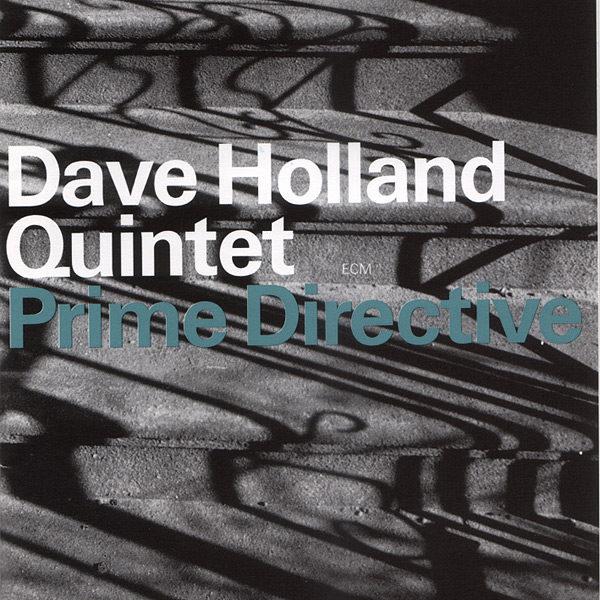
Since the first three Friday album covers have come from old recordings, I opted for an album cover of more recent vintage this week. Dave Hollands 1999 quintet recording Prime Directive opts for a simple cover theme. The use of what looks to be a simple stoop on a city brownstone evokes a certain familiarity, which is representative of the sympatico relationship between the members of Holland's band. Holland's quintet has been one of the most exciting groups in jazz for the past decade, largely because he manages to keep a stable lineup that plays and records together often enough to develop an impressive cohesion. Indeed, a recording from this quintet often feels like a meeting among friends on the stoop; the group sounds like they have been playing together their entire lives, but continue to interest each other (and their audience) because they can explore sides of each others' personality that can only be revealed through close contact over a period of years.
opts for a simple cover theme. The use of what looks to be a simple stoop on a city brownstone evokes a certain familiarity, which is representative of the sympatico relationship between the members of Holland's band. Holland's quintet has been one of the most exciting groups in jazz for the past decade, largely because he manages to keep a stable lineup that plays and records together often enough to develop an impressive cohesion. Indeed, a recording from this quintet often feels like a meeting among friends on the stoop; the group sounds like they have been playing together their entire lives, but continue to interest each other (and their audience) because they can explore sides of each others' personality that can only be revealed through close contact over a period of years.
Subscribe to:
Posts (Atom)

