
- Breaking down the first great Miles Davis Quintet
- My favorite tracks from the second great Miles Davis Quintet
- Blue in Green four ways
- A quick word about A Tribute to Jack Johnson
- Miles remembers one of his most celebrated performances
- Miles' 1959 arrest in NYC
- A Miles Davis radio interview before he lost his voice
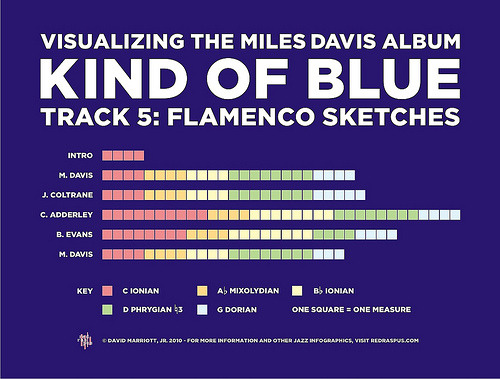
- Visualizing Flamenco Sketches
Showing posts with label Miles Davis. Show all posts
Showing posts with label Miles Davis. Show all posts
26 May 2012
Happy Birthday Miles

26 May 2011
Prince of Darkness
It's Miles Davis' 85th birthday. For some reason, May 26 is not yet a federal holiday, so instead of a day off from work, all you're getting is links to some of my previous Miles Davis content.
- Breaking down the first great Miles Davis Quintet
- My favorite tracks from the second great Miles Davis Quintet
- Blue in Green four ways
- A quick word about A Tribute to Jack Johnson
- Miles remembers one of his most celebrated performances
- Miles' 1959 arrest in NYC
- A Miles Davis radio interview before he lost his voice
- Visualizing Flamenco Sketches
16 May 2011
Stranger things have happened
On Google's Genius clone:
There are 18(!) songs on this 25 song playlist that are not justifiable. There's electronica, rock, folk, Victorian era brass band and Coldplay. Yes, that's right, there's Coldplay on a Miles Davis playlist.The sample mix also contained a George Jones track, which gives me an excuse to post this:
04 April 2011
Kind of Dub

In 2009 Secret Stash Records dusted this collection off breathing new life into it via a vinyl-only release. From the label: 'In the spring of 1981 a group of reggae studio musicians from Jamaica gathered in New York City under the direction of Jeremy Taylor, a music professor at NYU at that time. The result was this Reggae Interpretation of Kind of Blue.' As fate would have it, several weeks after directing the sessions Taylor passed away in his Paris hotel room while on a speaking tour of Europe. A final mix of the album was never released though it existed subrosa in rough, lo-fi, cassette form among genre enthusiasst. In 2009, Secret Stash Records began working with the Taylor estate to finally release the album creating both final mixes and dub versions. Reggae Interpretation of Kind of Blue the result of their efforts.Listen to the reggae rendition of So What here.
14 March 2011
List: Favorite Tracks From the Miles Davis Quintet, 1965-1968

- E.S.P., from E.S.P. Has any other band made a better opening statement? Perhaps, but I doubt it. At the end of the tune, Miles needs to drain his spit valve. To this day, whenever I hear the end of this track, my suppressed trumpet-player mind tells me to drain my spit valve, though I haven't picked up my horn in years.
23 February 2011
Blue/Green
From Kind of Blue , by Ashley Kahn:
h/t: Nextbop
, by Ashley Kahn:Evans's introduction is light and airy as originally conceived, creating a peaceful landscape for the group to enter into. The bass keeps a subtle beat while Cobb's two-handed brushwork on the snare drum offers tender reinforcement. Miles's muted solo arrives with an intensely languid, three-note phrase made even longer and more resonant by the natural echo of the studio (turn up the volume, and the vaulted ceiling is almost visible). Davis limits his vocabulary to long-held notes, dividing his phrasing into a series of whispered, two-part statements.
--
Evans told writer Brian Hennessey of a visit he paid the trumpeter in late 1958. "One day at Miles's apartment, he wrote on some manuscript paper the symbols for G-minor and A-augmented. And he said, 'What would you do with that?' I didn't really know, but I went home and wrote 'Blue in Green.'"
--
--
--
h/t: Nextbop
25 July 2010
28 June 2010
Music Monday
Miles Davis was the first jazz musician whose music I truly loved. I first began discovering his work when my parents bought me a copy of Kind of Blue for Christmas one year. I was 13. Miles is a great first love for any jazz fan, especially since his catalogue spans so many genres and schools of jazz that it serves as a pretty good proxy for the history of jazz between 1944 (his arrival on the New York scene) and 1975 (his first retirement). Miles was present in the first bebop, hard bop, avant-garde (for lack of a better term), and fusion recordings I ever heard.
But over the past few years the album to which I find myself returning again and again is Tribute to Jack Johnson, recorded in 1970 and released in 1971. The album was the result of music Miles produced for a documentary on the early-20th century heavyweight champion. The album featured John McLaughlin, Herbie Hancock, Billy Cobham, Steve Grossman, and Michael Henderson. In his autobiography, Miles doesn't say much about the album, except that he originally wanted Buddy Miles (then playing with Jimi Hendrix) on the album and that it was not adequately promoted by Columbia Records. In his magisterial biography of Davis, So What, John Szwed wrote that Miles passion for and knowledge of boxing helped give the album its sound:
But over the past few years the album to which I find myself returning again and again is Tribute to Jack Johnson, recorded in 1970 and released in 1971. The album was the result of music Miles produced for a documentary on the early-20th century heavyweight champion. The album featured John McLaughlin, Herbie Hancock, Billy Cobham, Steve Grossman, and Michael Henderson. In his autobiography, Miles doesn't say much about the album, except that he originally wanted Buddy Miles (then playing with Jimi Hendrix) on the album and that it was not adequately promoted by Columbia Records. In his magisterial biography of Davis, So What, John Szwed wrote that Miles passion for and knowledge of boxing helped give the album its sound:
His own feel for the movements of a boxer came across clearly in the soundtrack, where he tried to make the rhythms mime the grace and confidence of fighters like Sugar Ray Robinson.Szwed notes that Jack Johnson "was one of Miles' favorite recordings for a long time," which is saying something since Miles was often dismissive of his own work in retrospect. Darcy James Argue sparked my revived interest in Jack Johnson. In this blog post on Davis' 1970s work, Argue remembers when he first heard Jack Johnson, which "blew my head wide open" as a teenager:
I can even pinpoint the exact moment when my brains hit the wall -- it's early in "Right Off" where John McLaughlin drops to Bb, but Michael Henderson keeps going in E, and Miles decides this bitonal no-man's land would be the perfect spot for him to make his entrance. And it is.That moment comes at the 2:12 mark. Check it out below, it will get you through your Monday.
07 June 2010
Good Libations

In honor of the 40th anniversary of the original release of Bitches Brew, Miles Davis' 1970 paradigm-shifting landmark fusion breakthrough, we've created our own Bitches Brew - a bold, dark beer that's a fusion of three threads imperial stout and one thread honey beer with gesho root, a gustatory analog to Miles' masterpiece.Needless to say, I will buy up a bunch of this while it's around. Hopefully you live somewhere within Dogfish Head's reach. The Bitches Brew bottle will look nice on my shelf next to an empty bottle of Brother Thelonious.
15 February 2010
Remembering the First Miles Davis Quintet
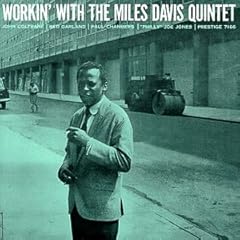 This weekend's post on Red Garland and Charlie Parker at JazzWax had me reminiscing about the mid-1950s Miles Davis quintet with Garland, John Coltrane, Paul Chambers, and Philly Joe Jones. Back when I was initially exploring jazz in middle school and high school, this band was the first of the canonical ensembles that I fell in love with. Having read a glowing review of Workin' With the Miles Davis Quintet in a book I had, I quickly bought copies of it and three other albums, Steamin', Cookin', and Relaxin', all of which were recorded over two sessions in 1956 as Miles wanted to fulfill obligations with Prestige Records before recording with Columbia. They were among the dozen or so albums that I listened to continually in high school as I developed my taste in jazz. Miles' playing during this period was also a major influence on my jazz improvisation at the time (I was quite taken by his lyricism, and leaned on him heavily as I developed my own sense of melodicism).
In his autobiography, Miles remembers that this band made him a star:
Wherever we played the clubs were packed, overflowing back into the streets, with long lines of people standing out in the rain and snow and cold and heat. It was something else, man, man. And a whole lot of famous people were coming every night to hear us play. People like Frank Sinatra, Dorothy Kilgallen, Tony Bennett (who got up on the stage and sang with my band one night), Ava Gardner, Dorothy Dandridge, Lena Horne, Elizabeth Taylor, Marlon Brando, James Dean, Richard Burton, Sugar Ray Robinson, just to mention a few.The band earned this star power, to be sure. Miles remembers "It was so bad that it used to send chills through me at night, and it did the same thing to the audiences, too." Miles had just recently made his mythologized "comeback performance" at the 1955 Newport Jazz Festival, playing Monk's 'Round Midnight to a captivated crowd. He had also kicked his heroin habit just before this period, and he had found a new energy which drove him to conquer the ears of jazz listeners. He had one of the all-time great rhythm sections behind him: The swinging Red Garland on piano, whose block chords and light touch glued the rhythm section; the fiery Philly Joe Jones on drums, who felt what Miles was thinking, and who Miles described as "the fire that was making a lot of shit happen;" and the extremely hip Paul Chambers on bass, who could make quarter notes swing like you could not believe.
Then there was Coltrane, commonly described as a diamond in the rough during this period in jazz histories. He was still putting his improvisational style together; it was only after his stint with Thelonious Monk a year later that he really sounds like the Coltrane who was the king of jazz in the early 1960s. But his often unmoored, searching solos managed to confound me and captivate me, though I only later really understood what he was trying to do at the time. And Miles himself was on top of his game, fragile and beautiful when playing ballads with a Harmon mute and powerfully melodic when playing without the mute. This band is overshadowed by Miles' later quintet with Herbie, Ron, Tony, and Wayne, but even 50+ years after these recordings were made, they are still engaging to contemporary ears.
The repertoire on these four albums balanced Miles' originals with standards that the band used at clubs regularly, allowing them to use the first complete take of each tune at the sessions. Sadly, a quick YouTube search yields no video of this band, but plenty of audio excerpts from these albums, which follow after the jump.
12 February 2010
Four & More
 Miles Davis made one of his most acclaimed recordings 46 years ago today. On February 12, 1964, Miles Davis and his quintet (then featuring George Colemanon tenor saxophone with the now-legendary Tony Williams-Ron Carter-Herbie Hancock rhythm section) played a benefit at Philharmonic Hall in New York's Lincoln Center for a coalition of civil rights groups including the Student Non-Violent Coordinating Committee, the Congress of Racial Equality, the recording of which (The Complete Concert 1964
 ) is among his best. But it could have turned out differently:
We just blew the top off that place that night. It was a motherfucker the way everybody played -- and I mean everybody. A lot of the tunes we played were done up-tempo and the time never did fall, not even once. George Coleman played better that night than I have ever heard him play. There was a lot of creative tension happening that night that the people out front didn't know about. We had been off for a while as a band, each doing other things. Plus it was a benefit and some of the guys didn't like the fact that they weren't getting paid. One guy -- and I won't call his name because he has a great reputation and I don't want to cause him no grief, plus he's a very nice guy on top of everything else -- said to me, "Look, man, give me my money and I'll contribute what I want to them; I'm not playing no benefit. Miles, I don't make as much money as you do." The discussion went back and forth. Everyone decided that they were going to do it, but only this one time. When we came out to play everybody was madder than a motherfucker with each other and so I think the anger created a fire, a tension that got into everybody's playing, and maybe that's one of the reasons everybody played with such intensity....And that's just one of the qualities that earned Miles the French Legion of Honor.
12 November 2009
November Links
 Via One Working Musician, Nas mashed up with the Jason Parker Quintet. Be sure to also check out Jason's 100 CDs Project. I'll be reviewing his new album in this space soon.
- Also to be reviewed soon, Robin Kelley's exhaustive new Thelonious Monk biography. I would review it sooner, but I'm taking my time with the book and enjoying it. In the meantime, Kelley was a guest on NPR's On Point last month.
- WTF: Louis Armstrong Sings Pharoah Sanders, via D:O. Also at D:O this week, a special guest post from Ethan Iverson of The Bad Plus, on Paul Bley.
- Someone discovers jazz from an unlikely source. Whatever it takes, right?
- On The Jazz Session, Jason Crane asks Sonny Rollins if jazz is still relevant. Sonny answers the question better than I could ever hope to.
- Chris Albertson recounts a lunch interview with Miles Davis in 1971.
- More 1971 Miles:

28 October 2009
The Art of Criticism 1
Introducing an occasional series which highlights customer reviews of classic jazz albums on Amazon.com. Consider all material (sic'd).
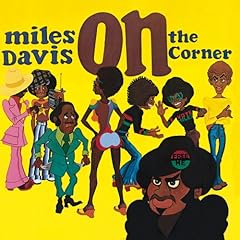
One star (out of five), Categorical dismissal: absolute junk

One star (out of five), Categorical dismissal: absolute junk
Jazz purists please avoid this title and stop with nefertiti or Miles in the Sky...You will be very happy that you didn't waste your money like I did. This cd got traded in to the used department so quickly out of my collection. I wouldn't even call it fusion let alone good funk.One star, Off topic: Concerning the credits
This issue of 'On the Corner' contains a mistake in the credits. Not a single percussionist is mentioned, although at least half of the music consists of percussion. The German issue of the Miles Davis autobiography (which includes an elaborate discography) lists three percussionists: Billy Hart (who is mentioned in the credits for drums, but not for percussion), Don Alias and M'tume. (P.S.: The single star is NOT for the music, but for the credits!)Five stars, Overwrought metaphor: Not for weak ears
So much has been said about this album, I couldn't write anything further, in general terms I agree totally with what Ashurra wrote(see his review below). What I can tell you is this: this album is just a like a hard drug, it will totally blow your mind the first time you listen to it, you will problably never go back to it, but if you dare, it can prove to be the most addictive thing on earth. If you're looking for something "pretty", go buy Kind of Blue and don't go back here, but if youre open to new experiences and if you have a pair of very adventoruous ears, then maybe you can get hooked by Saint Miles. This is NOT a jazz record, this is NOT a funk record, whatever that is, this is music that admits no cathegorization and only reveals its beauty after repeated listenings. Amen
02 September 2009
List: Under-the-Radar Live Albums
If you want to really experience jazz, you must see it live. With that in mind, record labels have been churning out live albums at a steady pace for as long as the technology existed to make high-quality recordings of live performances. Below are some of my favorite live albums that you might not have listened to yet.
One quick qualification: I'm going for underrated and lesser-known live albums on this list. Everyone knows about the Coltrane Village Vanguard recordings and Miles at the Plugged Nickel
 , so why repeat what's already been written? Here is the list, in chronological order...
Extra Credit: See also the recommended recordings on last year's list of top working ensembles.
All images via jazz.com except Live at the Lighthouse via inconstantsol.blogspot.com.
One quick qualification: I'm going for underrated and lesser-known live albums on this list. Everyone knows about the Coltrane Village Vanguard recordings
and Miles at the Plugged Nickel, so why repeat what's already been written? Here is the list, in chronological order...- Art Blakey: A Night at Birdland, Volumes 1
and 2
(1954). Come for the early incarnation of the Jazz Messengers, stay for the Clifford Brown. Brownie tore it up on this night in 1954, and his solos on Confirmation, Once in a While, and A Night In Tunisia are among the best he ever put on record. Not the most obscure choice to lead off the list, but it was also one of the first albums I ever bought, so I threw it in.

- Count Basis: Count Basie at Newport
(1957). To quote Ethan Iverson, "My advice is merely: listen to it. You want to know what jazz is? This is fucking jazz." Lester Young and Jo Jones sit in for an extended guest appearance; Illinois Jacquet, Roy Eldridge, and Jimmy Rushing also make guest appearances.
- Miles Davis: At Newport 1958
. Miles has many great live albums in his catalog, so it's no surprise this one isn't mentioned more often. However, there aren't many live offerings of Miles with Cannonball and Coltrane, so this one is essential, methinks. Throw in Bill Evans, Paul Chambers, and Jimmy Cobb, and you've got a great set. Mr. P.C.'s bass solo on Straight, No Chaser is sublime. Plus, the album cover features Miles in his sartorial splendor.

- Cannonball Adderley: Cannonball Adderley Quintet in San Francisco
(1959). Quintessential hard bop from some of the masters. Cannon & Co.'s take on Spontaneous Combustion is some of the best 12 minutes on record.
- Eric Dolphy: Eric Dolphy at the Five Spot, Vol. 1
(1961). Dolphy with Booker Little, Mal Waldron, Richard Davis, and Ed Blackwell, need I say more? More than any other album on this list, I revisit this recording again and again, and each time I am amazed at the unfulfilled potential of Dolphy and Little. Who knows what heights they may have scaled had they not died too young? Volume 2
is also available.

- Elvin Jones: Live at the Lighthouse, Volumes 1
and 2
(1972). Perhaps if someone had given a copy of these albums to Ken Burns, he would not have alleged that jazz "went away for awhile" during the 1970s.

- Old and New Dreams: Playing
(1980). I was made aware of this one by Destination Out, and I am better off now that I know it exists. Brilliant free jazz from Dewey Redman, Don Cherry, Charlie Haden, and Ed Blackwell.
- Keith Jarrett Standards Trio: Keith Jarrett at the Blue Note
(1994). Jarrett's trio with Gary Peacock and Jack DeJohnette have a ton of live recordings out there, but this one is my favorite, taken from a three-night stand at New York's Blue Note in 1994. Bonus quote from Amazon reviewer Stephen A. Smith: "Keith Jarrett's trio is the McDonald's of jazz. Its greatest sales asset is consistency."
- Pat Metheny: Tokyo Day Trip - Live EP (2008). I've gushed about this one enough already.
Extra Credit: See also the recommended recordings on last year's list of top working ensembles.
All images via jazz.com except Live at the Lighthouse via inconstantsol.blogspot.com.
22 June 2009
Race Relations, 50 Years Later
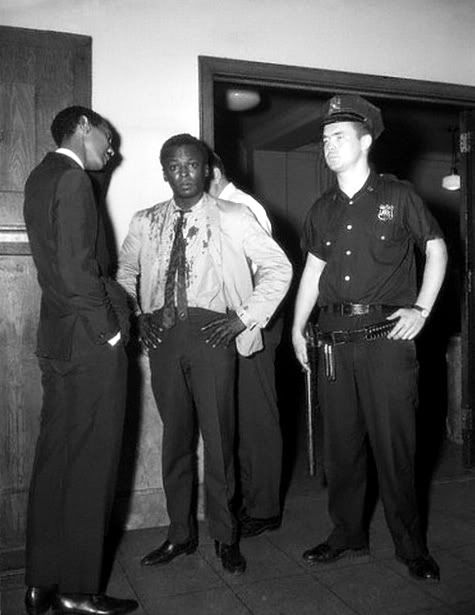 If Charlie Parker Was a Gunslinger ran this photo of Miles Davis a few days ago with the accompanying newspaper caption:
 Musician Arrested.Of course, in his autobiography, Miles remembered it differently:
New York -- Miles Davis, 32, of 881 10th Avenue, a trumpeter now appearing in Birdland, 52nd Street and Broadway, was arrested after fighting with patrolman Gerald Kilduff, who had ordered him to move from crowded sidewalk. In the scuffle, Davis was hit on the head with a blackjack for which a St. Clare's ambulance had to be called. (1959)
I had just finished doing an Armed Forces Day broadcast, you know, Voice of America and all that bullshit. I had just walked this pretty white girl named Judy out to get a cab. She got in the cab, and I'm standing there in front of Birdland wringing wet because it's a hot, steaming, muggy night in August. This white policeman comes up to me and tells me to move on. At the time I was doing a lot of boxing, so I thought to myself, I ought to hit this motherfucker because I knew what he was doing. But instead I said, "Move on, for what? I'm working downstairs. That's my name up there, Miles Davis," and I pointed to my name on the marquee all up in lights.Miles adds, "I would have expected this kind of bullshit about resisting arrest and all [for which he was charged that night] back in East St. Louis (before the city went all black), but not here in New York City, which is supposed to be the slickest, hippest city in the world." For all America's ills, at least some things have changed for the better. On with this month's links.
He said, "I don't care where you work, I said move on! If you don't move on I'm going to arrest you."
I just looked at his face real straight and hard, and I didn't move. Then he said, "You're under arrest!" He reached for his handcuffs, but he was stepping back. Now, boxers had told me that if a guy's going to hit you, if you walk toward him you can see what's happening. I saw by the way he was handling himself that the policeman was an ex-fighter. So I kind of leaned in closer because I wasn't going to give him no distance so he could hit me on the head He stumbled, and all his stuff fell on the sidewalk, and I thought to myself, Oh, shit, they're going to think that I fucked with him or something. I'm waiting for him to put the handcuffs, on, because all his stuff is on the ground and shit. Then I move closer so he won't be able to fuck me up. A crowd had gathered all of a sudden from out of nowhere, and this white detective runs in and BAM! hits me on the head. I never saw him coming. Blood was running down the khaki suit I had on. Then I remember Dorothy Kilgallen coming outside with this horrible look on her face--I had known Dorothy for years and I used to date her good friend Jean Bock--and saying, "Miles, what happened?" I couldn't say nothing. Illinois Jacquet was there, too.
It was almost a race riot, so the police got scared and hurried up and got my ass out of there and took me to the 54th Precinct, where they took pictures of me bleeding and shit. So, I'm sitting there, madder than a motherfucker, right? And they're saying to me in the station, "So you're the wiseguy, huh?" Then they'd bump up against me, you know, try to get me mad so they could probably knock me upside my head again. I'm just sitting there, taking it all in, watching every move they make.
- Fresh off the folding of Jazz Times, Nate Chinen's regular column at the magazine, The Gig, has moved over to his new blog of the same name. Here he discusses the jazz influences of indie rock stars Grizzly Bear.
- Michael Katzif at A Blog Supreme interviews Icons Among Us director Michael Rivoira.
- Black Classical has released a tribute to Blue Note Records: a huge mix featuring Blue Note tracks from Andrew Hill, Bobby Hutcherson, Wayne Shorter, Jackie McLean, and more. Check it out, it is worth a listen.
- Don Heckman interviews Jimmy Cobb on the anniversary of Kind of Blue.
- At Rifftides, Doug Ramsey reiterates what everyone should know: Late-period Ellington is among some of the best music ever recorded.
- Stephan Mejias takes a look at the latest reissue of Spiritual Unity.
- Jazz.com has a wide-ranging interview with Jack DeJohnette.
- Here is a snippet of Charles Mingus' Remember Rockefeller at Aticca (context):
22 May 2009
Out There...

 Sun Ra gets all the credit for fostering an Afronaut aesthetic within jazz, but one look at this cover from Eric Dolphy's 1960 album Out There shows that other musicians were also thinking about boldly going where no man had gone before. The metronome weirdly foreshadows the monolith from 2001: A Space Odyssey, don't you think?
Elsewhere in the jazz world...
- Howard Mandel ponders the dearth of female jazz fans, asking men to perhaps be a bit more inclusive and less misogynistic when it comes to jazz.
- Groove Notes posted an audio interview with Billy Hart on the murder of Lee Morgan.
- Philip Stein, an artist who created the mural that graces the back wall of the Village Vanguard, died last month. He was 90.
He was the sister of current Vanguard owner Lorraine Gordon. - You can now listen to archived performances from Smalls Jazz Club online (h/t All Music Blog).
- NPR has started its own jazz blog, and came up with a fantastic name, A Blog Supreme.
- Coming Soon! Kind of Bloop: An 8-Bit Tribute To Miles Davis.
- ESPN.com Special Correspondent Paul Shirley on basketball and jazz. The basketball/jazz comparison can be a bit tired, but Shirley adds new depth to the relationship. Now I have an excuse to post one of my favorite quotes from the American version of The Office. In a deleted scene from episode 1.05 ("Basketball"), Michael Scott ruminates:
And basketball is like jazz, you know. To like pertipify it there's a jazz musician, a guy, you know... if you know jazz you know who I mean. He's uh, God what was his name? Um, he plays one of those curly horns, like those really shiny curly horns that's used in jazz a lot.
Image via Monthly Top Ten
06 May 2009
Bonus Material
Some Dave Holland videos from the YouTube universe:
The Dave Holland Quintet plays Metamorphos at the 2002 Newport Jazz Festival. With Holland are Chris Potter on alto, Robin Eubanks on trombone, Steve Nelson on mallets, and Billy Kilson on drums.
The Dave Holland Quintet plays Metamorphos at the 2002 Newport Jazz Festival. With Holland are Chris Potter on alto, Robin Eubanks on trombone, Steve Nelson on mallets, and Billy Kilson on drums.
Here Holland plays "Cantaloupe Island" with Pat Metheny and Roy Haynes in 1992.
Here is Holland's quintet in 1986, with Kenny Wheeler on trumpet, Robin Eubanks on trombone, Steve Coleman on saxophone, and Marvin "Smitty" Smith on drums.
And finally, a snippet of Holland with Miles Davis in 1971. Also on the date were Chick Corea, Jack DeJohnette, Airto Moreira, and Gary Bartz
17 April 2009
Friday Album Cover: Prestige Records
Blue Note Records has often been the subject of Friday Album Covers, but Blue Note was not the only label creating beautiful album art during the 1950s and 1960s. Below are two of my favorite covers from Prestige Records, which produced plenty of great hard bop albums by Miles Davis, Sonny Rollins, and Thelonious Monk, among many others.
 Saxophone Colossus very much resembles the Blue Note Special, except the image of Rollins looks more like a silhouette than a tinted black-and-white photo.
 Featuring a crisp image of a stoplight with clean typography, Walkin' is distinctive much in the same way so many Blue Note albums were.

 Saxophone Colossus very much resembles the Blue Note Special, except the image of Rollins looks more like a silhouette than a tinted black-and-white photo.
 Featuring a crisp image of a stoplight with clean typography, Walkin' is distinctive much in the same way so many Blue Note albums were.
12 April 2009
List: 8 Essential Trumpet Solos

As a budding trumpet player in high school, I listened to a ton of trumpet solos. One of the most rudimentary steps in developing your own style as a jazz musician is to listen to as many other musicians as possible and transcribe their solos. By doing so, you improve your own ear and give yourself somewhat of a stylistic guide that serves as a jumping off point for your own voice. Below is a list of eight trumpet solos which any young musician would do well to transcribe. Some of the choices are rather obvious, and others (hopefully) are not as obvious. Feel free to let me know what I missed in the comments, the list is not meant as the be-all-end-all of jazz trumpet, but merely a starting point. The list is in relatively chronological order.
- Louis Armstrong, Wild Man Blues, from The Complete Hot Five and Hot Seven Recordings
: West End Blues gets all the attention for its divine opening cadenza, but I always preferred Wild Man Blues. Armstrong remains important to modern trumpet players both for his swagger and humanity, and he packs an abundance of both into this solo.
- Dizzy Gillespie, Shaw 'nuff, on many compilations
: Dizzy opened up new worlds for trumpet players, and his solos represent a primer on improvisation for young trumpet players. His work is an important building block for modern jazz trumpet improvisation.
- Miles Davis, Now's The Time, from almost any Charlie Parker
- Lee Morgan, Moanin', from Moanin'
: This is one of the more obvious choices on the list, but there is a reason for that. Morgan distills the entirety of hard bop into this solo, it swings violently, is drenched in the blues, but also reveals a harmonic sophistication that separated the wheat from the chaff of the genre. I could listen to this solo every day for the rest of my life and not get tired of hearing it. This solo is a necessary primer on hard bop for any young musician, trumpet player or not.
- Booker Little, Garvey's Ghost from Percussion Bitter Sweet
: Little plays outside the melody and around the changes, giving a new perspective on improvisation that bridges hard bop and free jazz.
- Miles Davis, My Funny Valentine, from The Complete Concert 1964: My Funny Valentine + Four and More
: Miles at an artistic peak. He transforms the tune with understatement.
- Freddie Hubbard, "One Finger Snap," from Empyrean Isles
:This is my favorite Hubbard solo. Hubbard had incredible chops, which makes transcribing his solos a physical as well as mental challenge. He compels you to improve your technique.
- Wynton Marsalis, Caravan from Marsalis Standard Time ~ Vol.1
: Wynton synthesizes a sizable chunk of jazz history in his earlier work, giving a good intro to neobop improvisation.
15 March 2009
Miles on Record
 Lockwood & Summit recently posted an audio interview of Miles Davis on KXLW in East St. Louis from 1953. Totally bizarre to hear Miles without the rasp in his voice (he got it in the mid-fifties when he got in an argument shortly after vocal surgery). Miles talks about the first time he heard Charlie Parker and Dizzy Gillespie in the mid-forties, and how he was captivated by the new sound - bebop.
Check it out. You can listen to the interview here.
h/t: WFIU Night Lights
photo via jazz in photo
Subscribe to:
Posts (Atom)


