
"It was not done with malice, and if I had known that that made-up word [macaca] would be connoted as a racial insult I would not have said it."Counterpoint:
24 January 2011
Blues and Politics
Point:

23 January 2011
An Oral Tradition
A blog post from James Hale this week had me reconsidering a question which I had wanted to ponder in a blog post awhile back, but eventually decided it wouldn't be worth the effort. At Jazz Chronicles, Hale asks, "Is 'Jazz' A Dated Term?" The impetus for this question was an ostensibly heated debate at a Jazz Journalists Association conference panel entitled "The State of Jazz Journalism" (any panel titled The State of _______ foreshadows contentious debate that may not be worth it, in my opinion). Alex Rodriguez responded to the post and posted his thoughts on the subject as well. Rodriguez contends that jazz journalists and critics share a responsibility to help the jazz audience (which is "sort of like a big, dysfunctional family") achieve balance in its understanding of the music, navigating between the poles of an ahistorical and "only-historical" approach to understanding jazz. I'm left with the intention to simply ignore both poles in favor of a different analytical framework altogether.
My only reservation about writing a jazz blog is that jazz writing is surrounded by this aura of responsibility. Jazz writers and critics are assigned (or assign themselves) a gatekeeper role which is unmatched in most areas of music journalism. Classical critics are superseded in this role by repertory, rock and hip hop critics by a more easily-arrived-at definition of the musics they cover (I'm overgeneralizing here, but bear with me). I follow a lot of indie rock blogs, and I can't recall any of them ever contending with the existential dilemmas that jazz bloggers address every few months or so. To mention just one example, nobody batted an eye when Gorilla vs. Bear included albums by Beach House, Big Boi, Arcade Fire, and Erykah Badu on its 2010 albums of the year list, even though those four artists occupy vastly different corners of the music world. I can't think of any jazz blog that included nonjazz on its year-end list (even my own list was divided into jazz and nonjazz). What strikes me about this is that probably not many people would mind if someone did this, but jazz bloggers effectively policed themselves, driven by the self-imposed responsibility to promote jazz ahead of other types of music (ostensibly because jazz is always dying, or at best, holding steady). The irony here, of course, is that the jazz world is such a complex ecosystem, a place where Wynton Marsalis, the Robert Glasper Experiment, and any number of swing, traditional jazz/Dixieland, postbop, neobop, acid jazz, and jazz-rock artists can coexist on a single record-store shelf. Adding a layer of segregation to year-end lists seems arbitrary to a silly degree.

But I digress. On the question of jazz being an outdated term or an inadequate genre signifier, I must confess that the word has a continually decreasing utility to me except as a quick and dirty signifier when people ask me what kind of music I like. When I reply "jazz," the conversation never goes in the same direction, because the fact is, stories of the death of jazz to the contrary, most people know what jazz is, and a surprising number of them have at least some jazz artist they can count among their favorite musicians, be it a singer like Nina Simone or Billie Holiday, a deceased legend like Miles Davis or Charlie Parker, or a current act like Medeski Martin and Wood or Esperanza Spaulding. This is because jazz remains an oral history with many branches, one with the "only-historical" approach to understanding the music already incorporated into individual artists' personalities and musical background. It may not be immediately obvious to everyone who hears the music (indeed, you can't really hear jazz until you've listened to a lot of it first).
Indeed, Rodriguez makes this point when he champions Jason Moran, whose music "starts from a historical place." Moran is not the only artist whose music is historicized. In a recent interview, Vijay Iyer (who titled a recent album Historicity, in case you were wondering how he grounded his approach) said of jazz:
I don't think of it as a style even. I think of it as a community of people who are invested in it. And I also think of it as a body of knowledge. You can say it's a history of ideas, and also, a history of actions. I think part of what's happened is that its reason for existing has transformed in terms of who's involved and why.
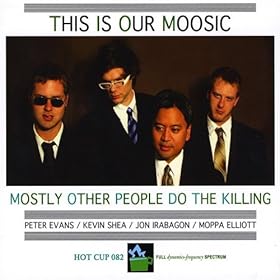
I am reminded of what Esperanza Spalding told Anthony Dean-Harris in an interview last year:
We need all the aspects of it [jazz] and that’s okay. We need the Wynton Marsalis and we need the Anthony Braxton and we need a Chris Botti and we need Christian Scott. We need a Ledisi and we need a Rachelle Ferrell. We need everything... We need it all because that word doesn’t belong to anybody anymore. It’s become so broad that to me the only element of that word that has any meaning universally is just improvisation. Jazz can be anything but maybe the only element that's there across the board is that people are creating it in the moment.Improvisation, too, but that is merely the tool for the self-examination and expression which unite the myriad sub-genres which constitute jazz in the 21st century. I'm going to take a break from the big-picture questions for awhile, but when the other debate making the rounds is whether or not Keith Jarrett is an asshole (and he is), I'll choose the big-picture topic anytime.
photo via
22 January 2011
Performance
Vijay Iyer, on playing the material from his recent solo album live:
I'm taking more risks with it and feel empowered to do that. There's a version of it that exists that's fairly stable that someone can revisit if they want, but now I don't have to do that -- now, I can do something else with it. It makes me want to transform it and try new things with it. For example, taking some of the Solo material and playing it with the trio. We've arrived at a related, but a very different arrangement of "Human Nature" that has its own dimensions to it that are kind of hinted at on the Solo record. Playing live with people in the same room as you is just a different experience than setting down a document of a studio performance because it's so much more about connecting in real time with the people around. I might be impelled to push my playing or push the structure of the music in a way that's more disruptive or more active or just sort of has more of a gravity to it, so that it really becomes an event in the course of a performance rather than just another song on an album. That sort of hints at what the differences are of playing live… it's hard to explain [laughs]. You have to be there.Read the whole thing here.
18 January 2011
Review: Saturn Sings
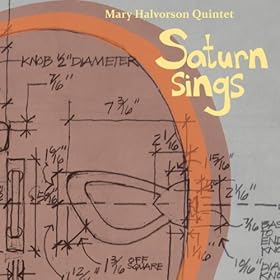
Saturn Sings

I must admit that I am wary of jazz guitarists. I am not too sure why, but I do not have many current guitarists in my iTunes library (those I have are the ones you'd expect: Metheny, Scofield, Frisell). I'm not an anti-guitar guy; I loved Matt Stevens' contributions to Christian Scott's Yesterday You Said Tomorrow and one of my favorite albums of 2010, Polar Bear's Peepers, featured a guitar-heavy rhythm section. But for some reason, I rarely seek out guitar-driven albums. For me to take notice of a new guitarist, the guitarist usually needs to do something I have not seen or heard before. Such is the case with Mary Halvorson, whose latest effort, Saturn Sings, features a unique approach both to the guitar and composition in particular. Sometimes accompanied by trumpeter Jonathan Finalyson and saxophonist Jon Irabagon, other times just with bassist John Hébert and drummer Ches Smith, Halvorson weaves together ten songs that take surprising turns, utilize unconventional meters, and flow with idiosyncratic phrasing. The result keeps me coming back for repeated listens, looking for new moments of beauty uncovered with each tick on the playcount.
Her band includes strong personalities, like Thelonious Monk Competition winner Iarabagon, but this album is clearly Halvorson's show. The tunes are so completely her own (though I can hear flashes of inspiration from Mingus and Shorter, among others), that even her sidemen's solos are colored by her compositional style. Rather than sublimating themselves into her footprint, the sidemen get inside her style, speaking her language while expressing their own thoughts (see for instance Irabagon's solo on Crack In Sky). Halvorson's own playing is dexterous. Halvorson can shift from a flurry of runs along the fretboard into an amelodic thunder of guitarisms utilizing effects pedals and the whammy bar that are truly unique. One thing she does that delights me is the way she makes her intense noises sound whimsical. She produces a wonderful cacophony of sounds both inside and outside the harmonic structure, but her playing contains a playful element which keeps me coming back to this album. I've often thought that a major problem facing jazz today is the fetishization of the new at the expense of music which may not be cutting edge but is nonetheless well-executed and fresh. Saturn Sings has both the excitement of the new and the polish of a veteran group. I can't wait to hear what's next, but I won't tire of the recent offering for a while.
Halvorson plays Sea Seizure (No. 19) at the 2010 Saalfelden Jazz Festival
Personnel: Mary Halvorson, guitar; Jonathan Finalyson, trumpet; Jon Irabagon, alto saxophone; John Hébert, bass; Ches Smith, drums
Track Listing: Leak Over Six Five (No. 14); Sequential Tears In It (No. 20); Mile High Like (No. 16); Moon Traps In Seven Rings (No. 17); Sea Seizure (No. 19); Crack In Sky (No. 11); Right Size Too Little (No. 12); Crescent White Singe (No. 13); Cold Mirrors (No. 15); Saturn Sings (No. 18)
17 January 2011
Dr. King
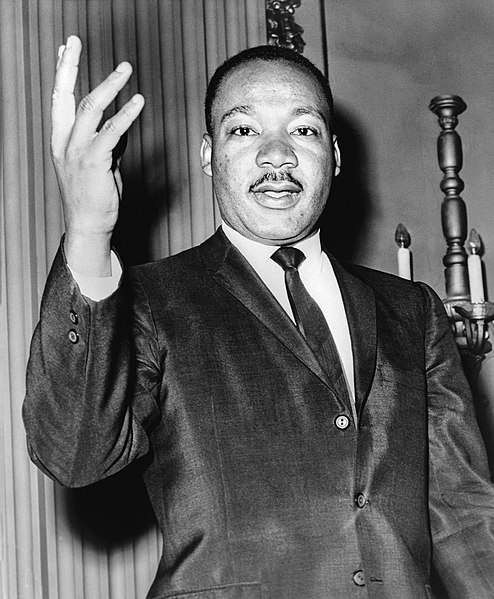
God has brought many things out of oppression. He has endowed his creatures with the capacity to create - and from this capacity has flowed the sweet songs of sorrow and joy that have allowed man to cope with his environment and many different situations.Also, below is Robert Glasper's Enoch's (Inaugural) Meditation, which uses clips from Martin Luther King's 1966 "We Shall Overcome" speech, Barack Obama's presidential election night victory speech from Grant Park in Chicago, and a clip of Cornel West on music.
Jazz speaks for life. The Blues tell the story of life's difficulties, and if you think for a moment, you will realize that they take the hardest realities of life and put them into music, only to come out with some new hope or sense of triumph. This is triumphant music.
Modern Jazz has continued in this tradition, singing the songs of a more complicated urban existence. When life itself offers no order and meaning, the musician creates an order and meaning from the sounds of the earth which flow through his instrument.
It is no wonder that so much of the search for identity among American Negroes was championed by Jazz musicians. Long before the modern essayists and scholars wrote of "racial identity" as a problem for a multi-racial world, musicians were returning to their roots to affirm that which was stirring within their souls.
Much of the power of our Freedom Movement in the United States has come from this music. It has strengthened us with its sweet rhythms when courage began to fail. It has calmed us with its rich harmonies when spirits were down. And now, Jazz is exported to the world. For in the particular struggle of the Negro in America there is something akin to the universal struggle of modern man. Everybody has the Blues. Everybody longs for meaning. Everybody needs to love and be loved. Everybody needs to clap hands and be happy. Everybody longs for faith. In music, especially this broad category called Jazz, there is a stepping stone towards all of these.
King text courtesy of HR-57 Center for the Preservation of Jazz & Blues
Subscribe to:
Posts (Atom)
Stats


