Showing posts with label Robert Glasper. Show all posts

29 January 2011

List: Jazz and the Single Man

Floating around social networks this week was an essay by Jason Moran listing five essential jazz albums (recorded by living musicians - so you could actually see them live) every man should own. Why should he own these albums? To impress women,* of course. Here is Moran's list. I think it's a good start, but it veers into jazz boyfriend territory (Ornette? Free Jazz? I don't know many people of either sex who can handle Ornette, bless their simple hearts and minds). So in the interest of choice, here's my list of 5 jazz albums every single man should own.


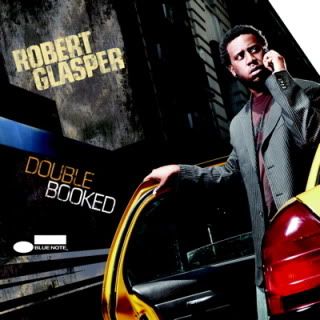
Robert Glasper, Double Booked. Moran and I agree on this one. Glasper's deftly amalgamated jazz, with flourishes of hip hop, fusion, funk, and postbop, can hook anyone who claims ignorance on modern jazz. I've been touting this album to my friends for the past two years, and it connects with just about everyone. Plus, Glasper tours with Maxwell, a spoonful of sugar to hide preconceived notions about jazz if ever there was one.

Greg Osby, Jason Moran, et al, New Directions. Sadly out of print, but there are copies to be had on Amazon. Not a bad choice to play for someone who is at least a little familiar with jazz, since they would likely recognize a few of the reworked classics from the Blue Note era on this disc. I highly recommend the Moran-Stefon Harris duet on Sam Rivers' Beatrice.

Sonny Rollins, Saxophone Colossus. Moran picks a great Wayne Shorter album, but I was always more of a Sonny guy myself, and if a lady can't dig Newk, then she is most definitely not worth your time.

Paul Motian, Joe Lovano and Bill Frisell, Time And Time Again. For quiet moments, you can't beat the master of subtle intensity. Frisell's atmospheric guitarisms set the mood for Lovano's gruff tenderness. This trio to me embodies a particular strain of masculinity that is equal parts vulnerable and assertive.And no other group better demonstrates the sublime intensity of free improvisation, despite playing such pretty music.

Medeski Scofield Martin & Wood, Out Louder. Sometimes you have to dance. This should do the trick.


*Would a list of jazz albums for women to impress men look a lot different? What about jazz for gay men or lesbians? Obviously the answer is yes, but I'm pleading ignorance here.

17 January 2011

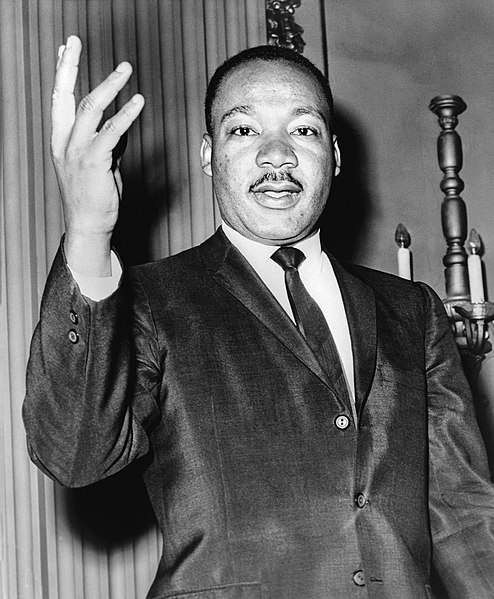
Dr. King

Commemorating Martin Luther King Day, I'd like to repost Dr. King's words about jazz from the 1964 Berlin Jazz Festival:
God has brought many things out of oppression. He has endowed his creatures with the capacity to create - and from this capacity has flowed the sweet songs of sorrow and joy that have allowed man to cope with his environment and many different situations.

Jazz speaks for life. The Blues tell the story of life's difficulties, and if you think for a moment, you will realize that they take the hardest realities of life and put them into music, only to come out with some new hope or sense of triumph. This is triumphant music.

Modern Jazz has continued in this tradition, singing the songs of a more complicated urban existence. When life itself offers no order and meaning, the musician creates an order and meaning from the sounds of the earth which flow through his instrument.

It is no wonder that so much of the search for identity among American Negroes was championed by Jazz musicians. Long before the modern essayists and scholars wrote of "racial identity" as a problem for a multi-racial world, musicians were returning to their roots to affirm that which was stirring within their souls.

Much of the power of our Freedom Movement in the United States has come from this music. It has strengthened us with its sweet rhythms when courage began to fail. It has calmed us with its rich harmonies when spirits were down. And now, Jazz is exported to the world. For in the particular struggle of the Negro in America there is something akin to the universal struggle of modern man. Everybody has the Blues. Everybody longs for meaning. Everybody needs to love and be loved. Everybody needs to clap hands and be happy. Everybody longs for faith. In music, especially this broad category called Jazz, there is a stepping stone towards all of these.
Also, below is Robert Glasper's Enoch's (Inaugural) Meditation, which uses clips from Martin Luther King's 1966 "We Shall Overcome" speech, Barack Obama's presidential election night victory speech from Grant Park in Chicago, and a clip of Cornel West on music.


12 April 2010

Herbie

Today is Herbie Hancock's seventieth birthday. Here are some musical tributes to Herbie.

Robert Glasper, Maiden Voyage/Everything In Its Right Place

More after the jump...

20 November 2009

Friday Album Cover: In My Element

Robert Glasper
In My Element

In a recent interview on Jason Crane's The Jazz Session, Robert Glasper said something that revealed the inherent trickiness in playing hip hop-flavored jazz:
"As far as I know, most people, you know, when they do do an electric album, it's after they finish doing their acoustic stuff and then they do an electric album."
At the risk of digging too deeply into one sentence from an hourlong interview, it seems like Glasper is implying that if you want to be taken seriously as a jazz musician, you have to start out by playing acoustic jazz. I will not argue with Glasper here, some people will still reflexively dismiss a musician who only plays fusion, and not any kind of straightahead postbop (those people were a convenient straw man to one side in the jazz wars of the 1980s and 1990s). Instead, what interests me is how this line of thinking can be extended to album art as well.

A while back, I examined a common template used on Blue Note album covers during the 1950s and 1960s, which I dubbed the "Blue Note Special." The cover to Glasper's In My Element features many characteristics of the Blue Note Special, including black-and-white photography, minimal text, the color blue, and a simple layout. That Glasper would reference such a classic design makes sense when considering the style of this album (which I would roughly classify as an adventurous postbop album) and his comment that jazz musicians often hew more closely acoustic jazz during the early stages of their careers. It is as if Glasper wanted to make sure we know that he is both referencing and updating a jazz tradition. In this case, the art, and the album itself, manage to deftly point forward while referencing a revered tradition: the classic Blue Note album covers of the 1950s and 1960s and the adventurous hard bop that filled the label's catalogue during that era.

09 October 2009

A Minor Corrective to the Jazz In Crisis Meme


Jazz fans are passionate to a fault, and us jazz bloggers even more so. In the wake of Terry Teachout's Wall Street Journal piece on the decline of the jazz audience, a whole host of bloggers have picked the piece apart, started a campaign to promote live jazz, and offered suggested albums to recommend to non-jazz listeners, among other responses. While the responses were thoughtful, they also (inadvertently) reveal a sense of defensive panic, as if we bloggers need to prove the vitality of jazz in the 21st century.

But I wish to offer a slightly more optimistic take on the situation. Instead of talking about the audience, I'll follow Patrick Jarenwattananon's lead and instead focus on the music. What is lost in the uproar over the audience is the fact that we are currently living in a golden age of piano trios. Not only are there a bunch of exciting groups putting out fantastic music, but the pantheon of these trios all have such an individual sound that even jazz neophytes can tell them apart. Below are just a few of the trios that are making the present moment such a satisfying one for jazz listeners.

Brad Mehldau Trio: Mehldau has loomed large over the jazz scene for over a decade, and his trio with bassist Larry Grenadier and drummer Jeff Ballard have put out a number of great albums over the last decade. I consider them the standard bearer of this group.


The Bad Plus
: Though we may be tempted to dub them enfants terribles for their deconstructive covers of pop and rock tunes, The Bad Plus are more of a postmodern edition of the traditional jazz piano trio.


Vijay Iyer Trio
: I'll let the rest of the jazz blogosphere do the talking here. I'll be giving their newest album, Historicity, a full review soon, but suffice it to say that it might be the best album of 2009. Iyer, bassist Stephan Crump, and drummer Marcus Gilmore have a fantastic musical rapport.


Keith Jarrett Standards Trio: The reigning master of repertory, along with bassist Gary Peacock and drummer Jack DeJohnette, will consistently knock your socks off with their discursive explorations of standards.


Robert Glasper Trio: Glasper gets a bit more pub for his Experiment band, but the acoustic trio is also a pretty good show.


Jason Moran's Bandwagon: Moran packs the entire history of jazz piano in his playing, but keeps it fresh and exciting. Bassist Tauras Mateen and drummer Nasheet Waits match him blow for blow in energy.


Medeski Martin & Wood
: Probably the most sui generis of this list, which is saying something. John Medeski usually sticks to electric instruments, but he is underrated on the acoustic piano.


Did I forget someone? Let me know in the comments...


Image via EyeShotJazz.

19 September 2009

Review: Double Booked

Robert Glasper
Double Booked

Occasionally when I listen to an artist that for some reason never entered my radar before, I am awarded a revelatory experience, after which I scramble to acquire as much of the artist's previous work as I can. Such is the case with Robert Glasper, the young pianist out of Houston who is causing quite a stir with his hip-hop-flavored jazz.

Like many young artists, Glasper's Facebook page lists a variety of major influences on his music, interspersing rapper J Dilla and the renowned rock band Radiohead among pianists Thelonious Monk and Chick Corea. However, unlike most jazz musicians with such ecumenical tastes, Glasper actively reflects these artists' influence in his work (quite literally in his rendition of Monk's "Think of One," in which he quotes the chord progression to Ahmad Jamal's "Swahililand," a tune that provided the backdrop for De La Soul's "Stakes Is High").

Double Booked is a two-part album; the first featuring Glasper's acoustic trio with bassist Vicente Archer and drummer Chris Dave, the second featuring Glasper's Robert Glasper Experiment, a fusion band featuring Dave, saxophonist Casey Benjamin, and bassist Derrick Hodge. Neo-soul vocalist Bilal also appears on the album's final two tracks.

The acoustic portion of the album plays up Glasper's subtle touch on the piano and spare compositions. The chord changes to "No Worries" and "Downtime" provide a rough frame for their respective melodies. Glasper's way of weaving in and out of the changes during his solos on these tunes is vaguely reminiscent of Keith Jarret, while his touch reminds me of Vince Guaraldi's skill at running up and down the keyboard.


Glasper's trio is on par with those of Jason Moran and Brad Mehldau, which is to say that it is as good as any. Archer and Dave match Glasper's ebb and flow intuitively, reflective of a group that is totally at ease in musical conversation.

The electric portion of the album finds Glasper in another vein entirely, presenting a fusion band adapted for the 21st century. The band reworks the Herbie Hancock classic into a futuristic spaced-out jam that recalls fusion-era Hancock filtered through the jamband Vida Blue. Saxophonist Casey Benjamin manages to use the vocoder in a way that doesn't make it seem like an antique. As with the melody from "No Worries," the music on Butterfly provides a cushoiny sonic backdrop on which Glasper lays down a far-reaching but constrained solo.


The final two tracks on the album, as mentioned above, feature neo-soul singer Bilal, who manages to blend with a band in a way that makes him seem like a fifth instrumentalist, rather than a singer in front of a backing band. Credit for this is due both to Bilal, who does not try to monopolize the musical space, and Glasper, who constructed a platform for Bilal's vocals which frames his singing well while also retaining interest for its own sake.

Jazz.com recently asked if Robert Glasper can unite fans of jazz and hip hop. Perhaps Glasper is not explicitly aiming for this goal (I imagine his main intention is to simply create good music and sustain a fruitful career), but Double Booked certainly has as good a chance of drawing hip hop fans into jazz as any album I can think of. That's a pretty good accomplishment if you ask me.


Track Listing: Intro; No Worries; Yes I'm Country (And That's OK); Downtime; 59 South; Think of One; 4eva; Butterfly; Festival; For You; All Matter; Open Mind
Personnel: Robert Glasper, piano, keyboards; Casey Benjamin, saxophone, vocoder; Vincent Archer Derrick Hodge, bass; Chris Dave, drums; Bilal, vocals


Image via this is tomorrow

16 September 2009

My Jazz Now


A Blog Supreme is running a series called Jazz Now, in which the ABS team and friends recommend five albums each from the past ten years to nascent jazz listeners. For a complete explanation of the project, go here. Patrick Jarenwattananon kicked things off with his five today, and asked for audience participation as well. So below are the five albums I would recommend to somebody looking to get into current jazz, in order of date released.


1. Dave Holland Quintet: Prime Directive (2000). Holland is the Art Blakey of the modern postbop scene, assembling an array of talented younger players to augment his bands, which have become a kind of graduate school in jazz performance.


2. Jason Moran: Modernistic (2002). Moran's reimagining of the James P. Johnson classic "You've Got to Be Modernistic" is worth the price of the disc alone. Moran has an uncanny ability of packing the entire history of jazz piano into his style while keeping it fresh and surprising the listener at every turn.


3. Happy Apple: Youth Oriented (2003). As I wrote in this space last year, Happy Apple
expands the boundaries of jazz, incorporating rock and avant-garde influences while allowing plenty of room for individual and group improvisation. Their work is often exhilarating, and very rewarding to those who can stomach a little chaos.

4. The Bad Plus: Prog (2007). The Bad Plus appear to be a popular group for these lists. These Are The Vistas is my favorite album of theirs, but that one has been chosen by a few people already, so I will go with Prog instead, which features some choice covers and great originals.


5. Robert Glasper: Double Booked (2009). I'll be posting a review of this album later in the week, but suffice it to say that I've already recommended this album to a few friends who don't really listen to much jazz.

Honorable Mentions
The Bad Plus: These Are The Vistas
Paul Motian: Time and Time Again
Darcy James Argue's Secret Society: Infernal Machines
Medeski Martin & Wood: Tonic
Chris Potter: Follow the Red Line
Wayne Shorter: Footprints Live


You can read the entire Jazz Now series at A Blog Supreme (image via NPR).

Stats