Showing posts with label The Jazz Wars. Show all posts

23 January 2011

An Oral Tradition

A blog post from James Hale this week had me reconsidering a question which I had wanted to ponder in a blog post awhile back, but eventually decided it wouldn't be worth the effort. At Jazz Chronicles, Hale asks, "Is 'Jazz' A Dated Term?" The impetus for this question was an ostensibly heated debate at a Jazz Journalists Association conference panel entitled "The State of Jazz Journalism" (any panel titled The State of _______ foreshadows contentious debate that may not be worth it, in my opinion). Alex Rodriguez responded to the post and posted his thoughts on the subject as well. Rodriguez contends that jazz journalists and critics share a responsibility to help the jazz audience (which is "sort of like a big, dysfunctional family") achieve balance in its understanding of the music, navigating between the poles of an ahistorical and "only-historical" approach to understanding jazz. I'm left with the intention to simply ignore both poles in favor of a different analytical framework altogether.

My only reservation about writing a jazz blog is that jazz writing is surrounded by this aura of responsibility. Jazz writers and critics are assigned (or assign themselves) a gatekeeper role which is unmatched in most areas of music journalism. Classical critics are superseded in this role by repertory, rock and hip hop critics by a more easily-arrived-at definition of the musics they cover (I'm overgeneralizing here, but bear with me). I follow a lot of indie rock blogs, and I can't recall any of them ever contending with the existential dilemmas that jazz bloggers address every few months or so. To mention just one example, nobody batted an eye when Gorilla vs. Bear included albums by Beach House, Big Boi, Arcade Fire, and Erykah Badu on its 2010 albums of the year list, even though those four artists occupy vastly different corners of the music world. I can't think of any jazz blog that included nonjazz on its year-end list (even my own list was divided into jazz and nonjazz). What strikes me about this is that probably not many people would mind if someone did this, but jazz bloggers effectively policed themselves, driven by the self-imposed responsibility to promote jazz ahead of other types of music (ostensibly because jazz is always dying, or at best, holding steady). The irony here, of course, is that the jazz world is such a complex ecosystem, a place where Wynton Marsalis, the Robert Glasper Experiment, and any number of swing, traditional jazz/Dixieland, postbop, neobop, acid jazz, and jazz-rock artists can coexist on a single record-store shelf. Adding a layer of segregation to year-end lists seems arbitrary to a silly degree.

But I digress. On the question of jazz being an outdated term or an inadequate genre signifier, I must confess that the word has a continually decreasing utility to me except as a quick and dirty signifier when people ask me what kind of music I like. When I reply "jazz," the conversation never goes in the same direction, because the fact is, stories of the death of jazz to the contrary, most people know what jazz is, and a surprising number of them have at least some jazz artist they can count among their favorite musicians, be it a singer like Nina Simone or Billie Holiday, a deceased legend like Miles Davis or Charlie Parker, or a current act like Medeski Martin and Wood or Esperanza Spaulding. This is because jazz remains an oral history with many branches, one with the "only-historical" approach to understanding the music already incorporated into individual artists' personalities and musical background. It may not be immediately obvious to everyone who hears the music (indeed, you can't really hear jazz until you've listened to a lot of it first).

Indeed, Rodriguez makes this point when he champions Jason Moran, whose music "starts from a historical place." Moran is not the only artist whose music is historicized. In a recent interview, Vijay Iyer (who titled a recent album Historicity, in case you were wondering how he grounded his approach) said of jazz:
I don't think of it as a style even. I think of it as a community of people who are invested in it. And I also think of it as a body of knowledge. You can say it's a history of ideas, and also, a history of actions. I think part of what's happened is that its reason for existing has transformed in terms of who's involved and why.
I am tempted to block-quote his entire answer, but he goes into a lot of detail, so I'll paraphrase here. Iyer notes that because the socio-economic circumstances upon which jazz was built have changed (i.e. jazz musicians for the most part no longer come from an oppressed minority whose avenues for artistic self expression were limited by society), jazz itself has changed, and has grown and diversified to the point that the word cannot contain the music anymore. But even still, jazz musicians are still striving towards an expression of the self that feels "in its own small way impossible." For Iyer, this is connected to his own status as a man born from first-generation Indian immigrants, creating a new identity of the South Asian-American jazz musician. For someone else, there is another identity to invent. Because jazz is a music of invention, as time moves on the inventions multiply into a fractal of multitudes which may not all sound alike, but nonetheless remain jazz. They are born into the same tradition, but take it places that make sense to them.

I am reminded of what Esperanza Spalding told Anthony Dean-Harris in an interview last year:

We need all the aspects of it [jazz] and that’s okay. We need the Wynton Marsalis and we need the Anthony Braxton and we need a Chris Botti and we need Christian Scott. We need a Ledisi and we need a Rachelle Ferrell. We need everything... We need it all because that word doesn’t belong to anybody anymore. It’s become so broad that to me the only element of that word that has any meaning universally is just improvisation. Jazz can be anything but maybe the only element that's there across the board is that people are creating it in the moment.
Improvisation, too, but that is merely the tool for the self-examination and expression which unite the myriad sub-genres which constitute jazz in the 21st century. I'm going to take a break from the big-picture questions for awhile, but when the other debate making the rounds is whether or not Keith Jarrett is an asshole (and he is), I'll choose the big-picture topic anytime.

photo via

17 July 2010

Icons Among Us

Icons Among Us: Jazz in the Present Tense

"The truth never remains the same... The truth is now." So says Nicholas Payton at the outset of the DVD version of Icons Among Us, the documentary of modern jazz which has sparked much discussion in the jazz world over the past year. The film searches for an answer to the question which has sparked so many blog posts: What is jazz, or more specifically, what is jazz today? Those looking for a definite answer to this question will be disappointed by the film, but the meandering discussion, culled from interviews with about fifty different musicians, says a lot.

Jazz has become a music that is united not by certain stylistic tendencies, but by a broad range of traditions which inform, rather than define the music (that, at least, is my best attempt at a definition). The major arguments suggested by the documentary are united by one theme: the limits of codification. Well, almost. Wynton Marsalis, a figure present in any debate about the nature of jazz, makes a few appearances throughout the film, though he doesn't say much that anyone familiar to the debate hasn't heard before. At the beginning of the film, he laments, "We [jazz musicians] try to get as far away from that art as possible." He makes a facile analogy to other recognized art forms, saying, "We're the only people who created an art form and then tried to figure out how to make it not have a definition." While people are still trying to get into what Homer or Dante did, according to Marsalis, modern jazz musicians are running away from the past. Of course, we do not expect modern novelists to write something like The Iliad.

But let's not dwell on Wynton. Though at first glance, Icons Among Us seems like a convention of Nextbop artists, we hear from a number of musicians who you would never expect to share a bill at a festival, including Matthew Shipp, Wayne Shorter, Skerik from Garage a Trois, and Esperanza Spaulding. Unlike Marsalis, most of these artists eschew a reductive take on jazz, and instead argue that in a world where geographic and stylistic boundaries have been collapsed, what matters more than adherence to certain bedrock principles inherent in jazz is a pure expression of the unadulterated self. Most of the musicians in Icons Among Us don't care so much about defining their music. They know that it accurately reflects themselves and that it is not mainstream, and that seems to be enough.

Indeed, it seems the only rule in jazz to most of the musicians we hear from in the film is the emphasis on improvisation. Through improvisation a musician can channel both historical precedents like Bill Evans and Wayne Shorter in addition to other styles that appeal to that particular musician, be it hip hop, Americana, or whatever. By the end of the film, you can listen to performances from Roy Hargrove and the Brain Blade Fellowship, and even though they sound worlds apart, you can't really either of them anything but jazz. Is the argument (such as it is) in Icons Among Us successful? I can't tell, since I am clearly predisposed to this kind of heterodox definition of jazz. But it does show that, small(ish) audience to the contrary, we can at least say that jazz is alive and well, if nothing more.


See also: The Jazz Indie: an icons among us blog

30 June 2010

Yes, Yes, A Thousand Times Yes

I never wrote that promised response to the latest volleys in the jazz wars, but Will Layman touched a nerve in an essay for PopMatters this week, so I may yet chime in. In a review of Icons Among Us (which I'll be reviewing as soon as I can get a copy from NetFlix), Layman lays out the problem facing jazz with elegant simplicity:
For most people, jazz is a dead man's music. This just might be the problem in making jazz a sustainable art form.
The whole article is here. It is worth your time this morning. Layman takes a detached stance from the argument that contemporary musicians should break free from the past and even eschew the word jazz, but I am all for it. As Nicholas Payton puts it in the film, "In order to find the way, you must leave the way. You have to be open." I know my view is still in the minority, but regardless, the word "jazz" retains a large amount of cultural baggage which skews most people's perception of the music. If a label is getting in the way of the music, then it may be time to simply invent a new label and move on.

22 June 2010

Review: Ten

Jason Moran Bandwagon
TEN


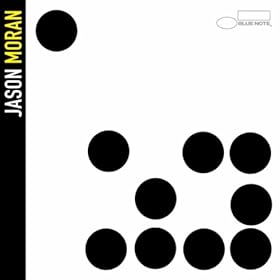
Last week's salvo in the ongoing Jazz Wars debates brought up an interesting dilemma: How can musicians contend with the deep historical record of the art while making music that speaks to the present? Jason Marsalis complained to Chris Barton earlier this month that "Almost NO music before 1990 is referenced in the majority of music played today." This is a specious straw-man argument, though, since Marsalis apparently can't name any of the music that he is referencing (Marsalis may defend himself by saying he does not want to hurt anyone's feelings, which is a weak cop out). Most importantly, though, one only needs to hear the music of the leading young musicians in jazz to realize that the past is not being ignored. For Exhibit A, I present Jason Moran, whose Bandwagon trio celebrates ten years of making music with their latest album, TEN.

Like another pianist whose praises I've sung before, Vijay Iyer, Moran has a way of making complex (dare I say nerdy?) music sound intuitive and natural. Also like Iyer, Moran has an encyclopedic knowledge of jazz history as well as the chops to incorporate that history into his playing. Listen to his take on Thelonious below, which is emblematic of his approach to jazz history.


You can certainly hear traces of Monk in his playing. Like Monk, he infuses the tune with stride phrasing, but he takes the same ingredients and makes a totally different meal. Moran and his bandmates, bassist Tarus Mateen and drummer Nasheet Waits, take on another Monk tune on TEN, Crepescule With Nellie. As with Moran's rendition of Thelonious above, the Bandwagon uses phrases and motifs familiar to anyone who has listened to Monk before, but places them in different parts of the tune, collapsing the familiar construction of the standard. The band also has a bit of fun with rhythm, utilizing at different points swing, shuffle, rubato, and straight-eighths. Monk would have never tried to play the tune this way, but that's part of the reason why it sounds so fresh now, of course.

But this album is more than the Monk cover suggests. Indeed, it is a celebration of the ten years this trio has been together, including another take on the Gangsterism theme which has graced so many of their albums. This band at some point could reach the lofty status afforded such trios as Bill Evans' with Scott LaFaro and Paul Motian or the Brad Mehldau Trio: bands that set the precedent for years to come. Moran, though, is a once-in-a-generation talent, a pianistic infovore whose command of such a huge swath of jazz history is simply formidable. The fact that he can bring this knowledge to bear in such a captivating way is both the icing and the cake.


Track Listing: Blue Blocks; RFK in the Land of Apartheid; Feedback Pt. 2; Crepescule with Nellie; Study No. 6; Pas de Deux--Lines Ballet; Gangsterism Over Ten Years; Big Stuff; Play to Live; The Subtle One; To Bob Vatel of Paris; Old Babies
Personnel: Jason Moran, piano; Tarus Mateen, bass; Nasheet Waits, drums

16 June 2010

About Those Jazz Nerds...

I was thinking about responding to this, but then Andrew Durkin shed some wisdom on the subject that I could not dispute:

Life is too short to spend time deconstructing specious arguments that rely on easily caricatured straw-men. Instead, I will quote Thelonious Monk.
Where's jazz going? I don't know. Maybe it’s going to hell. You can't make anything go anywhere. It just happens.
Update: I am also reminded of what Delmond Lambreaux of Treme (a jazz trumpeter based loosely on Christian Scott according to Patrick Jarenwattananon) said in episode 4 earlier this year: "Jazz hasn't run hot or cold since bebop. It just is, man."

07 May 2010

Must Reads

Did you hear? The jazz wars are back on. Well, sort of. This week saw two takes on the ongoing debate over what is and isn't jazz from Peter Hum and Nextbop's Anthony Dean-Harris. You should read them, for I don't want to spoil their arguments by excerpting them here.

I suppose I should weigh in, and I may work out my thoughts for a long-form piece later this month. In the meantime, suffice it to say that I'm with Esperanza, with the added rejoinder I posted on Jason Parker's blog a few months ago on the declining utility of jazz as a brandname. More on that later, though.

16 April 2010

Christian Scott and a New Jazz Orthodoxy

It has been a long time since Wynton Marsalis made the cover of Time Magazine. Twenty years ago, actually. Though he had risen to the top of the jazz world by that time, the October 20, 1990 issue of Time served as Wynton's unofficial coronation as the most well-known jazz musician in mainstream America. With that, of course, came his role as the major tastemaker in the jazz world (and the accompanying backlash which still lingers). But in the intervening two decades, we have yet to see another jazz musician rise to the top of the heap, as it were, and become the new face of jazz for the mainstream.

Enter Christian Scott. His latest album, Yesterday You Said Tomorrow, was released last month, and Scott has made a media blitz which is rare for a jazz musician. Scott has appeared on late-night talk shows and NPR, sat in with Thom Yorke of Radiohead, and been featured in Vibe, New York Magazine, and the Village Voice, just to name a few. None of this matches Wynton's Time cover, but Scott could very well add a few more high profile notches to his belt before the year is up (it should be noted that Maralis had been leading his own groups for almost a decade before the Time cover). On top of that, Yesterday You Said Tomorrow could very well make everyone's year-end lists of the best albums of 2010. I will not predict that Scott will become the Marsalis; such predictions rarely end up being true. But whether or not he gets noticed by the rest of America, he could very well play an important role in the ongoing evolution of jazz.

The question "What is jazz?" is beyond cliche, but Christian Scott is fast becoming the embodiment of an answer to this question (though not necessarily the answer), whether he likes it or not. Though I suspect he may like it. Having read and watched a number of different interviews of his lately, it is plainly evident to me that Scott is not afraid to share his feelings on jazz. Case in point, in his recent All About Jazz interview, Scott recounts his own disagreements with Marsalis, and criticizes his narrow conception of jazz, "He got to this place where he's at the top of the pile, and then he decided he was going to tell everyone else in the country what to listen to and how to play jazz." Scott goes on to dismiss the idea of recording a standards album, as well. None of this is, of course, anything new for a jazz musician to say. However, Scott and a number of his contemporaries, to me, embody a conception of jazz that moves beyond the Jazz Wars of the 1990s (Marsalis complaints notwithstanding).

Musicians like Christian Scott, Vijay Iyer, Robert Glasper, and Jason Moran (just to name a few) seem to experience jazz as an oral tradition, one that is adaptable to various external forces and one which can incorporate new strands without losing its identity as jazz.1 You can find ample evidence of this relationship with jazz in the music of these artists. For one, they seem to fill out their repertoire with both nonjazz tunes (from genres as diverse as classical, rap, alternative rock, and gospel) and standards written by some of jazz's universally-recognized masters, like Miles Davis, Thelonious Monk, or Andrew Hill. They are reverent of the past, but they value individual expression over belonging to a certain school (as Davis, Monk, and Hill did).

As for the nonjazz tunes, they run the gamut from M.I.A. to Radiohead to Ligeti and beyond. What's important is not the specific music but the fact is that far from jazz, yet these musicians love it enough to bring into the fold. This is obviously not the first generation to listen to other kinds of music besides jazz, nor is it the first to incorporate it into its own music. Rather, Christian Scott and company draw heavily from one strain of jazz tradition that is ecumenical in its source material. Some forebears in this strain would include Lennie Tristano, Anthony Braxton, Wayne Shorter, and Herbie Hancock.

So Scott has made a powerful argument for bridging the gap between Marsalis' neoclassicists and his detractors, who maybe were a bit too preoccupied with denying boundaries (or maybe not, and their resistance to Marsalis was less about boundaries in general than Marsalis' specific boundaries). Regardless, though Christian Scott may become just another jazz musician who occasionally pops into the popular consciousness, he has made his position on what is jazz quite clear, and he is not alone in his artistic choices.


Note: Moran and Glasper appeared on my Jazz Now list last year, and two of the three other groups on my list, The Bad Plus and Happy Apple, I would say share this relationship to jazz I am describing.

FURTHER READING
Jason Parker on jazz and cultural relevance (I'd say Jason and I are on a similar wavelengths)
Time's 1990 cover story on Marsalis
Christian Scott's AAJ interview
A Blog Supreme's Jazz Now project


1 Of course, calling jazz an oral tradition is somewhat anachronistic, as the music can be preserved in a number of physical forms (recordings and sheet music most prominently) which are vastly more efficient means of propagation than oral transmission. But even so, because of the existence of recordings, we can experience music in its historical moment well after it was created, allowing up-and-coming musicians to become familiar with a vast musical history in a relatively short amount of time. We can arrange our introduction to the past in such a way as to learn the tradition chronologically, as if witnessing a century of history in order. In other words, we can comprehend jazz as an oral tradition through artificial recreations of the past (i.e. recordings).

06 February 2010

The "Is X Dead?" Meme Is Not Unique To Jazz

Even NPR is not a safe haven from the last volleys of the Jazz Wars, as the comment section of a recent blog post at A Blog Supreme showed. As David Adler points out, the post itself is innocuous, but the comment section quickly spun into a round of contradictory accusations.
Why can't jazz still sound like Dexter Gordon? Why does jazz still sound like Dexter Gordon? Why are young musicians so afraid to break the rules? Why are young musicians so heedless of the rules?
But this somewhat reactionary tendency to lament the loss of a golden age is not limited to the jazz world. Last week Rachel Maddux asked in the pages of Paste Magazine, Is Indie Dead?. Hey, at least this pathology isn't limited to jazz listeners...


Image via JazzTimes

16 May 2009

Listening to Free Jazz

If one record can be said to be responsible for the Jazz Wars, then Ornette Coleman's Free Jazz (A Collective Improvisation) would surely have to be a candidate. Along with John Coltrane's Ascension, Free Jazz is one of the more radical points of departure in the avant-garde canon. Instead of one quartet, it features two. Instead of individual tunes, it features two takes of collective improvisation. It is definitely the most provocative jazz album ever released. It even featured a Jackson Pollack print on the album cover to up the ante. If The Shape of Jazz to come and Change of the Century were were warning shots, Free Jazz must have seemed like an atomic bomb when it was released in 1960.

But despite its notariety and reputation, I have never listened to the album. It is perhaps the most glaring hole in the jazz canon to which I have not been exposed. I have no good reason not to have heard it before. Since I first began to enjoy Ornette's music in college, I have listened to much of his catalogue, and liked much of it. Free Jazz always seemed like such a daunting listening task, though. It is not the kind of album you can throw on any day and check out. With all its baggage, Free Jazz carries with it a weight of responsibility; you cannot simply listen to it, you must take it in and contemplate it. For that reason, I had always put off listening to the album.

But no longer. I had sacrificed my own credibility too long, having not even sat through Coleman's first magnum opus. So the other night I sat down and listened to the entire album in one sitting. Below are my thoughts as I listened, condensed with some after-the-fact edits for clarity's sake.

This album belies the stereotype of free jazz as a caterwauling nonmusical free-for-all. Though the album is frenetic, there is also a lot of order. You could not make an album like this without some good listeners. Also, despite the reputations of Coleman, Dolphy, and Hubbard, there is a lot of space in these tracks from the winds. With steady rhythm underneath, each front-line player gives ample space to the rest of the front line most of the time.

The term "Collective Improvisation" is a misnomer; There is way more arranging on this album than you would expect.

When I listen to this, I think of jazz being broken down only partially, in big chunks, then rebuilt. Each instrument on the album sounds like jazz on its own, and collected together they build an entirely new structure out of the original parts; like deconstructing Huck Finn and rewriting it as On the Road. Free Jazz is still jazz, like On the Road is still a novel. But still, it feels like an entirely new style regardless.

The album was most definitely a worthy experiment, but not the most essential Ornette album on my list. One wonders what this album would have sounded like had Ornette only used his regular quartet at the time (with Billy Higgins, Charlie Haden, and Don Cherry). Could four voices be as effective as eight? This is not to say that it is not a good album, just not an ideal introduction to Ornette Coleman for novices.


Other Resources
Jazz.com reviews First Take
Do the Math on early Ornette Coleman: "Free Jazz has some great moments but is too monochromatic. As I speculated before about the two Contemporary albums, I wonder if Free Jazz has harmed Ornette’s reputation, especially at the time it was released."

20 April 2009

On TV Tonight

The Documentary Channel begins airing its four-part series on jazz, Icons Among Us, tonight at 9:00 Eastern. Ben Ratliff reviewed the series for the New York Times this weekend, calling it "a retort to Ken Burns’s 2001 television documentary 'Jazz.'" You can read more about the series at the Documentary Channel's website and the Icons Among Us website. I would watch, but Comcast has decided not to include the channel in my cable lineup (alas, there's always NetFlix). They recently took Fox Soccer and the MLB Network from me as well, so it might be time for a shake-up at Hot House Global HQ...


Video still via iconsamongus.com

23 March 2009

Can Wynton Be Free?

Earlier this week, Howard Mandel discussed the upcoming season of Jazz At Lincoln Center, which includes a performance by Ornette Coleman's quartet. As you can imagine, some observers are enthusiastic that a major partisan in the jazz wars has embraced one of the major figures and influences of the opposing camp.

In the same post, Mandel embedded a YouTube of the Lincoln Center Jazz Orchestra playing an arrangement of Coleman's tune "Free," first recorded in 1960 on Change of the Century. The arrangement (which is uncredited on YouTube, but presumably was written by one of the band's members at the time) is interesting enough, but what shocked me was the solo by Marsalis on trumpet. In short, he plays outside the changes with authority. Here's the video:


Wynton's solo does justice to Don Cherry. Though he plays with tonality, his solo is remarkably free and well-conceived. I admit to being a bit taken-aback by the solo. Though I wouldn't have expected him to impose a more familiar structure onto the tune, I also was not expecting him to produce a free jazz solo of that quality. But Wynton is a virtuoso, and you know he has studied Ornette. So perhaps it is not surprising that he could play the tune so well. Even so, nice solo.

05 February 2009

Must Read

I don't read much architectural criticism at all, but I always read every new Robert A.M. Stern, dean of the Yale school of architecture,
Architecture students should be exposed to the widest possible range of contemporary ideas in order to find their own way. In the process, they will learn the most important lesson of architectural history: There are no right and wrong styles, only well- and poorly conceived buildings.
Well put, indeed. In an environment where artists and critics turn simple disagreements over style into armed conflicts (think of the Jazz Wars), it is important for us to remember that though the stakes may seem high, let's keep our cool.

21 December 2008

Wynton Marsalis is the Ronald Reagan of Jazz - Not That There's Anything Wrong With That

On Monday morning I awoke to find a wonderful surprise on my RSS reader: a panoply of new posts on Do The Math examining the Young Lions of the 1980s and the jazz wars of that decade, as well as an extensive interview (and blindfold test!) with Wynton Marsalis. What a great early holiday gift from Ethan Iverson. Do yourself a favor and skim through some of the goods. Some of the material delves into historical and musical minutiae that only a specialist can really understand, but there are plenty of tidbits that will entertain even casual jazz fans.

The material as a whole brought to my mind a thought I had explored somewhat deeply during my time in graduate school. During that time, when I was mentally plotting out possible dissertation topics, I explored the idea of writing a cultural history of jazz that effectively contextualized the music in American thought and culture. Basically, I thought I would rewrite Jazz in American Culture my way. One chapter idea for the dissertation which received much contemplation was a study of Wynton Marsalis' rise to prominence during the 1980s. The idea in my mind was to connect the forces surrounding the rise of Marsalis to those surrounding the rise of Ronald Reagan.

Calling Wynton Marsalis the Ronald Reagan of jazz is not a new idea. Indeed, invoking Reagan in the pejorative sense had become somewhat of a favored mode of attack in the jazz wars. Shortly after the Ken Burns Jazz documentary aired in 2001, this screed made the rounds on the internet, in which saxophonist Mike Zilber issued a number of pronouncements against Marsalis (who was a major consultant to and presence in the documentary), Burns, and the documentary itself. The charges themselves are mostly not worth repeating, since you can read the entire piece on this page and anyone familiar with the controversy around the document is well aware of the points made in Zilber's critique.

But my idea was to examine the connection between Reagan and Marsalis in a non-pejorative, inquisitive manner. Indeed, Reagan's name carries with it an almost inconceivable amount of baggage, as this year's election cycle showed us time and again. However, if you look past the mythology built around Reagan and examine the personal feelings behind his ideology and how he resonated with a large coalition of voters in 1980, I think you will find more than a few interesting similarities between he and Marsalis that help explain Marsalis' own rise to prominence as well as the "renaissance" of jazz he helped lead in the 1980s.

The lazy critique of Marsalis posits that he does not like a lot of jazz made during the 1960s and 1970s. His detractors point out that Marsalis has never paid tribute to Marion Brown or Keith Jarrett at Jazz at Lincoln Center the way he has to Duke Ellington or Charlie Parker. This, they argue, shows his hand. As Mike Zilber put it,
Marsalis is now the Ronald Reagan of jazz and, like Reagan, has no memory of those nasty 60s and 70s, preferring to bask in the halcyon days of Roseland, Satchmo and wax recordings.
Though Zilber and others have overstated this fact, it is still important to note that Marsalis feels and is not afraid to argue that much of the music produced and marketed as "jazz" during the 1960s and 1970s is not jazz. More specifically, Marsalis has argued many times that two strains of American jazz - the experimental avant-garde and jazz-rock fusion - should not be considered jazz (he would call both styles "improvised music" instead). This, not surprisingly, rubs many musicians, critics, and fans the wrong way.*

Marsalis has made two arguments for these exclusions. The first, which Wynton expresses in his DTM interview, and which his intellectual godfather Stanley Crouch has repeated elsewhere, is that by succumbing to inclusion ad infinitum, the word jazz loses its meaning. Instead, Marsalis argues, one must draw the line somewhere. For Marsalis, swing is one of the essential traits of jazz (the blues aesthetic is another), so any evaluation of what is or is not jazz begins by determining whether the music in question swings (though it should be noted that Marsalis' tastes seem to have broadened over the past 15 years).** As Iverson argues in his DTM posts, Marsalis and his contemporaries fetishize swing to an astonishing degree. Avant-garde jazz and fusion do many things, but they do not swing the way Marsalis and his peers swing. So it is not surprising why Marsalis would argue for the exclusion of those styles from The Jazz Tradition.

The second reason speaks both to cultural politics and musical analysis. In Monk's Music: Thelonious Monk and Jazz History in the Making (Roth Family Foundation Music in America Imprint), Gabriel Solis explains Marsalis' has description of the 1960s and 1970s as a time when some jazz musicians lost their way. The historical trajectory of jazz was altered when a number of musicians followed the trails of either the avant-garde or fusion. Both styles were not jazz. Fusion was no better than rock music. As Wynton put it "If you were there it was a great way to meet women and have a good time... but it's a death toll for jazz musicians." And the avant garde was also decidedly non-jazz. It was merely "a reaction to the European avant-garde," which sacrificed The Jazz Tradition for the sake of innovation. Because so many musicians fell under the spell of fusion or the avant-garde, jazz ceased to exist as an artistic musical expression that also captured the ears of a substantial audience, according to Marsalis.

Marsalis sought to return jazz to this cultural moment at which jazz could be both accessible and elevated to high art status. He and the Young Lions brought a renewal to jazz following these musical upheavals of the 1960s and 1970s. The excesses of the avant-garde and the crass comercialism of fusion were to be cast aside for jazz that built upon a tradition that was artistic but did not innovate for the sake of innovation. It can easily be described Morning in Jazz if you wanted to make reference to Reagan.

Marsalis was successful. He became enough of a cultural zeitgeist to appear on the cover of Time and secure his appointment as Artistic Director of Jazz at Lincoln Center, where he institutionalized his program of jazz renewal. But not only that, he created great jazz that itself should be included in The Jazz Tradition. On DTM, Iverson restates the case for Marsalis Standard Time ~ Vol.1, J Mood, The Wynton Marsalis Quartet Live At Blues Alley, and Black Codes (From the Underground), and I heartily second. He may have touched off the Jazz Wars in the process, but he would argue that he also helped blaze the path for creating The Jazz Tradition.

This story of renewal following two decades in the wilderness is oddly reminiscent of the narrative employed by Ronald Reagan in 1980, just around the same time Marsalis began his apprenticeship with Art Blakey and the Jazz Messengers. Reagan saw the politics of the 1960s and 1970s much in the same way Marsalis saw the jazz of those eras. The major thenes of Reagan's 1980 Presidential campaign included critiques of the boated welfare state of the 1960s, the loss of momentum in the Cold War at the hand of detente during the 1970s, and the permissive youth culture of both decades. As Marsalis perceived his music as a renewal of jazz, Reagan presented his platform as a vehicle of American renewal (whether he achieved it or not is a whole other story).

Like Reagan, Marsalis consolidated his ideas into a movement, creating a template for his own school to follow and for his detractors to criticize. Both men placed themselves in important historic moments, at which point they were to lead the public on a historical trajectory. Both are at the center of debate in their respective fields almost thirty years afterward, in the 2008 Republican Presidential primaries in Reagan's case, and in the postmortem of the Jazz Wars in the case of Marsalis. So aside from being a superficially biting critique of Marsalis, the comparison to Reagan also reveals much about the way Marsalis may perceive of himself in jazz history.

--

Big h/t and a heartfelt thanks for being who they are to: The Bad Plus (DTM)

For more on Marsalis, see Eric Porter, What Is This Thing Called Jazz?: African American Musicians as Artists, Critics, and Activists, pp. 287-334 and Gabriel Solis, Monk's Music: Thelonious Monk and Jazz History in the Making, pp. 150-151.

*There is an undeniable amount of resentment inherent in these critiques of Marsalis. As Artistic Director of Jazz at Lincoln Center, he is in a particularly powerful position as the preeminent tastemaker of American jazz. Certainly, most of his critics would enjoy that kind of critical power.
**
Marsalis postulates this theory, which he calls the "purist ethic in jazz," in a 1988 op-ed piece for the New York Times, "What is Jazz - And Isn't." Iverson summed up a major critique of this position brilliantly in his DTM post, writing that to his detractors, Marsalis appeared to have "a unified disdain for jazz music that wasn’t swinging, virtuosic, and informed only by the great black jazz musicians comfortable with chord changes."

30 July 2008

Review

Miles Electric: A Different Kind of Blue

Like any other art, jazz has had its fair share of artistic controversies. Think of Charlie Parker, Dizzy Gillespie, and the creation of bebop. Or Ornette Coleman's 1959 debut at the Five Spot in New York. No controversy compares, though, to the one that greeted Miles Davis when he decided to incorporate electronic instruments and rock-and-roll rhythms into his music at the end of the 1960s. It is in this context that filmmaker Murray Lerner presents Miles Electric: A Different Kind of Blue. Lerner, through interviews with former bandmates and footage of Davis' performances, seeks to examine Davis' shift from jazz titan to rock star, pairing his short documentary with a complete take of Davis' 38-minute performance at the 1970 Isle of White festival.

The film opens with two opposing views of Davis the Rock Star. Carlos Santana describes Miles as the ultimate searcher, looking for new avenues of "musical orgasm," as he quotes Davis. He is followed by Stanley Crouch, who essentially calls bullshit, and argues that Miles turned to jazz-rock fusion simply for the money and popularity. After presenting the controversy that surrounded Davis at the time and afterwards, Lerner largely leaves this narrative behind, instead focusing on the ins and outs of Davis' then-new style. The film is littered with interviews with a variety of Davis associates from that era: Santana, Herbie Hancock, Chick Corea, Dave Liebman, Gary Bartz, Dave Holland, and more. These musicians together describe and dissect different aspects of Davis' music at this time. After 35 minutes of dissection, Lerner concludes the film with Davis' Isle of White performance.


Clip from Davis' Isle of Wight Performance

The film is at its best when Lerner's interview subjects discuss what it was like to play with Miles at this time. Hancock, Corea, and Keith Jarrett all describe their experiences as Davis forced them to play electronic instruments in his band; Hancock remembers that he had never seen an electric piano before Miles brought one into the studio for him one day. Santana describes Davis' relationship with himself, Jimi Hendrix, and other young lions of the late-sixties rock world as a symbiotic one, noting that just as Hendrix intrigued Davis with his sprawling psychedelic rock, so did Davis shake up Hendrix when he recorded A Tribute to Jack Johnson. All these musicians describe Davis both as an astute, if laconic, teacher, who guided their development of a new sound and instilled a necessary sense of fearlessness into their artistic selves.

Davis in 1973 with Dave Liebman, left, and Michael Henderson, background

Where this documentary falls short, however, is in its incomplete portrayal of the uproar which accompanied Davis' turn to jazz-rock fusion. Aside from two clips of Crouch (Crouch entertainingly tells of how he listened to Bitches Brew in various states of consciousness in an effort to like the music), Lerner does not include any critical commentary on Davis' music from this period. This poses two problems, the first being that the film assumes the viewer already knows about both the controversy and Davis' own stature and history up to the late sixties. Lerner could do better by explaining how Miles had come to represent the epitome of sophistication and cool by the mid-sixties, both through his music and style. There is no context relative to the rest of the jazz world in the film. Is it not too much to ask for even a cursory discussion of the state of jazz in the late-sixties?

Secondly, Lerner's skimping on the Miles Davis controversy presents to much of a dichotomous depiction of Davis' music: it is either groundbreaking art, as Santana argues, or pop-shlock, as Crouch argues. A more nuanced portrayal would have served Lerner well here. Many people (including Crouch) have noted that Davis was wary of turning into a nostalgia act, but as John Szwed notes in So What, it is tough to charge Miles Davis with trying to make a quick buck when he was releasing albums with tracks that would stretch on for ten minutes or more. Davis' Isle of Wight performance consists solely of a 38-minute long jam that ebbs and flows in and out of tonality and melody. Were he totally selling out, surely he would have presented less challenging music on stage than that. Also, unlike the Tony Williams Emergency, John McLaughlin's Mahvishnu Orchestra, or other fusion bands of the era, Miles spliced songs together out of different group improvisations cut in the studio, tunes which did not translate into a stage repertoire. Of course, you would not know that from watching Miles Electric.

Lerner also does himself a disservice by presenting Stanley Crouch as the stand-in for all criticism of Davis. While he presents an important vantage point in the jazz wars (his essay on the post-Bitches Brew Davis is a must-read for the student of jazz history), by no means is his view gospel for the anti-fusion factions in the jazz wars. We also don't hear from any of his associates from the sixties who avoided fusion and electronic jazz; there is no Ron Carter, for instance. Certainly, the debates that still rage about Davis' turn to fusion are one of the reasons his music from this period remains so captivating today. At an hour and thirteen minutes, there is certainly more time in the documentary to hear more of the critical take on Miles Davis.

17 July 2008

15 May 2008

On Medeski Martin & Wood


Medeski Martin & Wood have been the most difficult to classify group in jazz for the better part of two decades. They have won legions of followers coming from diverse corners of the musical world by embracing an ecumenical approach to music, combining avant-garde harmony, hard-driving rhythm, refreshing spontaneity, and soulful sense of funk. Their music often shows up on my iPod, and I often think about the ongoing debate over "What is Jazz?" while listening to them. The trio occupies an interesting space in this debate. Though they may not be too concerned with the question, their music reveals the limitations of a restrictive definition of jazz, and highlights the difficulties encountered when trying to define a music so diverse as jazz.

Wynton Marsalis made a name for himself in the 1980s as the wunderkind who took the jazz world by storm, both with his virtuosity and his knack for publicity. Through interviews in Down Beat and articles written for publications including the New York Times, Marsalis argued for a definition of jazz which some criticized as rigid and somewhat arbitrary. In a 1988 op-ed piece for the New York Times, "What is Jazz - And Isn't," Marsalis complained, "Too often, what is represented as jazz isn't jazz at all." He argued that earlier practitioners of jazz had "created rules... that were so specific, so thorough and so demanding that a great art resulted." Marsalis elaborated to delineate a "purist ethic in jazz," which is built upon the twin pillars of blues and swing. To put it briefly, jazz music, by definition, swings and reflects a blues aesthetic. For Marsalis, swing and the blues are the sine qua non of jazz.

This by necessity caused Marsalis to dismiss large portions of the avant-garde and jazz fusion as non-jazz, a distraction from the true tradition initiated and propelled forward by the likes of Louis Armstrong, Charlie Parker, and Thelonious Monk. Using his post as artistic director at Jazz at Lincoln Center, Marsalis was the chief agent promulgating this strict definition of jazz, promoting the works of artists like Tadd Dameron or Duke Ellington, among many others, who easily fit into this definition. As a result, he and Jazz at Lincoln Center came under criticism from other artists and critics for ignoring artists like Muhal Richard Abrams or John McLaughlin, to name but a few, whose work falls outside Marsalis' traditional definition of jazz.

The music of Medeski Martin & Wood adds an interesting dimension to Marsalis' definition of jazz as an art built upon the twin pillars of blues and swing. Listen to the above recording of Medeski Martin & Wood playing their composition "Big Time;" one can easily hear the qualities deemed essential to jazz by Marsalis. The blues aesthetic is always present in Medeski Martin & Wood's compositions, filtered through layers of funk and dressed up with complex harmonies, giving the blues a more modern hue. This blues feeling is not contrived, either. I saw them play live in Miami Beach in 2006, and the highlight of the show was a cover of Ray Charles’ “What’d I Say,” drenched in blues.

That Medeski Martin & Wood are well-versed in the blues is likely not something Marsalis would dispute. Their sense of swing, though, falls outside the boundaries of what one would expect to hear from a jazz group. Despite this, they still swing. Medeski Martin & Wood do not swing in the way that Count Basie or John Coltrane swing. They impart a more funky kind of swing, with precedents in R&B, hip hop, and rock and roll. Wynton Marsalis would not swing this way, but that does not mean Medeski Martin & Wood do not swing.

By incorporating their own take on swing, Medeski Martin & Wood reveal a multifaceted dimension of jazz which does not necessarily overturn Wynton Marsalis’ “purist ethic,” but instead arrives at that ethic from a different direction. Marsalis’ definition of jazz (blues + swing = jazz) posits a linear relationship between jazz and non jazz, with the two at opposite ends of a straight line. However, this definition does not account for a group like Medeski Martin & Wood (though, admittedly, Marsalis would probably not consider their music to be jazz). I am not of the opinion that any improvised music that claims to be jazz is jazz. There are certain qualities and stylistic elements that should be present. However, I find Marsalis’ insistence on a particular type of swing and blues to be too one-dimensional. Instead of jazz being on a line opposite non-jazz, I conceptualize jazz as an area on a plane surrounded by non-jazz. Thus, artists like Medeski Martin & Wood could occupy a different zone than, say, J.J. Johnson, but both could still be jazz.

08 May 2008

Review

Monk's Music: Thelonious Monk and Jazz History in the Making
Gabriel Solis


Thelonious Monk is a curious figure in jazz history. Revered by his peers and other musicians, he did not receive the recognition he deserved from a mainstream audience until the 1960s, when he appeared on the cover of Time and was able to play regularly in the New York jazz scene again after a forced hiatus related to legal troubles. This was a full twenty years after he made his debut on the New York scene, playing in bands with Cootie Williams and Coleman Hawkins, and taking part in the jam sessions with Dizzy Gillespie and Charlie Christian, among others, at Minton's Playhouse where bebop was developed. It is not surprising, though, that it took awhile for the public to fully appreciate Monk, being that he was the supreme iconoclast of modern jazz. While he was often referred to as the High Priest of Bop, his own style was too unique to be lumped in with bebop, and most piano players of his day developed a style more closely related to Bud Powell's style than Monk's.

Ask any musician or jazz fan today about Monk, though, and you will likely hear that Monk is a seminal influence on most jazz musicians who came after him, and that his own idiosyncratic style is something that any jazz musician must contend with at some point in his or her musical development. In his provocative new study, Monk's Music: Thelonious Monk and Jazz History in the Making, musicologist Gabriel Solis examines the transformation of opinion surrounding Monk's music, and how jazz musicians of all stripes utilize Monk's music in the formation of both their own voice and competing jazz traditions. Though he begins with a cursory review of Monk's life, Solis' book is less about Monk and more about the way his jazz musicians engage with past masters in order to cultivate a personal style which drives the music forward. Solis uses the music of Thelonious Monk to demonstrate how jazz musicians make music which is "conscious of the past while simultaneously seeking to develop its impact on the present."

Solis is masterful in his analysis of recorded performances of Monk's music from artists across a broad range of styles, including Wynton Marsalis, Danilo Perez, and The Art Ensemble of Chicago. Solis takes the analysis further by placing Monk's music in the context of the debate between mainstream traditionalists like Marsalis and the avant garde over the definition of jazz and the role of tradition in jazz. Because Monk was an iconoclast in his own time whose ideas were later adopted and examined by a wide variety of musicians, it seems quite logical to Solis that Marsalis can claim Monk as a pillar of The Jazz Tradition, while other artists outside the jazz musician can argue that Monk is the type of artist whose existence negates a unified jazz tradition. Solis leaves the reader with a nuanced understanding of the mainstream-avant garde debate, and uses performances of Monk to illustrate the complexities of the debate.

Solis does not escape this review unscathed, though. One of his strong points is his multidisciplinary approach to jazz studies. Take a look at Solis' bibliography, and you will find Hegel, Foucault, and Erik Erikson scattered in with the usual jazz studies fare. However, while Solis can handily parse and analyze jazz musicians and their work, he has more trouble digesting Foucault. Despite this shortcoming, Solis has made a strong opening statement in his first book. He is an original thinker who can push the still-nascent field of jazz studies into new arenas and dimensions, and Monk's Music is illustrative of his academic potential, in addition to being a solid work of scholarship.

Stats