
I'm taking more risks with it and feel empowered to do that. There's a version of it that exists that's fairly stable that someone can revisit if they want, but now I don't have to do that -- now, I can do something else with it. It makes me want to transform it and try new things with it. For example, taking some of the Solo material and playing it with the trio. We've arrived at a related, but a very different arrangement of "Human Nature" that has its own dimensions to it that are kind of hinted at on the Solo record. Playing live with people in the same room as you is just a different experience than setting down a document of a studio performance because it's so much more about connecting in real time with the people around. I might be impelled to push my playing or push the structure of the music in a way that's more disruptive or more active or just sort of has more of a gravity to it, so that it really becomes an event in the course of a performance rather than just another song on an album. That sort of hints at what the differences are of playing live… it's hard to explain [laughs]. You have to be there.Read the whole thing here.
22 January 2011
Performance
Vijay Iyer, on playing the material from his recent solo album live:

18 January 2011
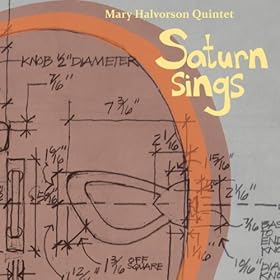
Review: Saturn Sings
Saturn Sings

I must admit that I am wary of jazz guitarists. I am not too sure why, but I do not have many current guitarists in my iTunes library (those I have are the ones you'd expect: Metheny, Scofield, Frisell). I'm not an anti-guitar guy; I loved Matt Stevens' contributions to Christian Scott's Yesterday You Said Tomorrow and one of my favorite albums of 2010, Polar Bear's Peepers, featured a guitar-heavy rhythm section. But for some reason, I rarely seek out guitar-driven albums. For me to take notice of a new guitarist, the guitarist usually needs to do something I have not seen or heard before. Such is the case with Mary Halvorson, whose latest effort, Saturn Sings, features a unique approach both to the guitar and composition in particular. Sometimes accompanied by trumpeter Jonathan Finalyson and saxophonist Jon Irabagon, other times just with bassist John Hébert and drummer Ches Smith, Halvorson weaves together ten songs that take surprising turns, utilize unconventional meters, and flow with idiosyncratic phrasing. The result keeps me coming back for repeated listens, looking for new moments of beauty uncovered with each tick on the playcount.
Her band includes strong personalities, like Thelonious Monk Competition winner Iarabagon, but this album is clearly Halvorson's show. The tunes are so completely her own (though I can hear flashes of inspiration from Mingus and Shorter, among others), that even her sidemen's solos are colored by her compositional style. Rather than sublimating themselves into her footprint, the sidemen get inside her style, speaking her language while expressing their own thoughts (see for instance Irabagon's solo on Crack In Sky). Halvorson's own playing is dexterous. Halvorson can shift from a flurry of runs along the fretboard into an amelodic thunder of guitarisms utilizing effects pedals and the whammy bar that are truly unique. One thing she does that delights me is the way she makes her intense noises sound whimsical. She produces a wonderful cacophony of sounds both inside and outside the harmonic structure, but her playing contains a playful element which keeps me coming back to this album. I've often thought that a major problem facing jazz today is the fetishization of the new at the expense of music which may not be cutting edge but is nonetheless well-executed and fresh. Saturn Sings has both the excitement of the new and the polish of a veteran group. I can't wait to hear what's next, but I won't tire of the recent offering for a while.
Halvorson plays Sea Seizure (No. 19) at the 2010 Saalfelden Jazz Festival
Personnel: Mary Halvorson, guitar; Jonathan Finalyson, trumpet; Jon Irabagon, alto saxophone; John Hébert, bass; Ches Smith, drums
Track Listing: Leak Over Six Five (No. 14); Sequential Tears In It (No. 20); Mile High Like (No. 16); Moon Traps In Seven Rings (No. 17); Sea Seizure (No. 19); Crack In Sky (No. 11); Right Size Too Little (No. 12); Crescent White Singe (No. 13); Cold Mirrors (No. 15); Saturn Sings (No. 18)
17 January 2011
Dr. King
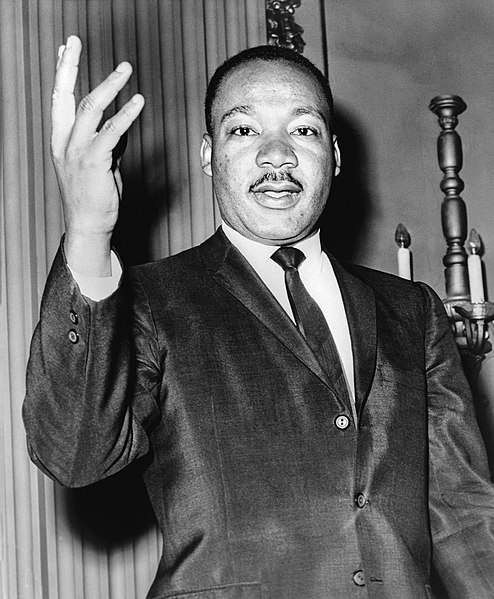
God has brought many things out of oppression. He has endowed his creatures with the capacity to create - and from this capacity has flowed the sweet songs of sorrow and joy that have allowed man to cope with his environment and many different situations.Also, below is Robert Glasper's Enoch's (Inaugural) Meditation, which uses clips from Martin Luther King's 1966 "We Shall Overcome" speech, Barack Obama's presidential election night victory speech from Grant Park in Chicago, and a clip of Cornel West on music.
Jazz speaks for life. The Blues tell the story of life's difficulties, and if you think for a moment, you will realize that they take the hardest realities of life and put them into music, only to come out with some new hope or sense of triumph. This is triumphant music.
Modern Jazz has continued in this tradition, singing the songs of a more complicated urban existence. When life itself offers no order and meaning, the musician creates an order and meaning from the sounds of the earth which flow through his instrument.
It is no wonder that so much of the search for identity among American Negroes was championed by Jazz musicians. Long before the modern essayists and scholars wrote of "racial identity" as a problem for a multi-racial world, musicians were returning to their roots to affirm that which was stirring within their souls.
Much of the power of our Freedom Movement in the United States has come from this music. It has strengthened us with its sweet rhythms when courage began to fail. It has calmed us with its rich harmonies when spirits were down. And now, Jazz is exported to the world. For in the particular struggle of the Negro in America there is something akin to the universal struggle of modern man. Everybody has the Blues. Everybody longs for meaning. Everybody needs to love and be loved. Everybody needs to clap hands and be happy. Everybody longs for faith. In music, especially this broad category called Jazz, there is a stepping stone towards all of these.
King text courtesy of HR-57 Center for the Preservation of Jazz & Blues
15 January 2011
Weekend Reading
I want to stimulate them instead of asking them simply to accompany me in front of the public. But I find that it's very difficult to do, because the jazz musician is probably the only person for whom the composer is not a very interesting individual, in the sense that he prefers to destroy what the composer writes or says.-Ornette Coleman to the French philosopher Jacques Derrida in an interview for the French magazine Les Inrockuptibles, 1997. Read the whole thing here.
...
Most people thought that I just picked up my saxophone and played whatever was going through my head, without following any rule, but that wasn't true.
14 January 2011
Mingus Tweets

 . Written during the 1960s, the book is structured as a conversation with Mingus' therapist, and covers his sex life, thoughts on race and American society, and his contentious upbringing. The first draft was a 1,500-page manuscript, the published version was edited down to a little under 400 pages.
Below is a sample of what I think @Mingus would have been like. All the quotes are presented context-free, sometimes in more than 140 characters.
- They shouldn't have stopped! They're all wrong--I was right! (p. 31)
- "Fuck all you pathetic prejudiced cocksuckers," he thought. "I dig minds, inside and out. No race, no color, no sex. Don't show me no kind of skin 'cause I can see right through to the hate in your little undeveloped souls." (p. 66)
- I don't ever want to stop thinking, it's the only way I can go forward. (p. 107)
- [Fats Navarro to Mingus]: Jazz ain't supposed to make nobody no millions but that's where it's at. Them that shouldn't is raking it in but the purest are out in the street with me and Bird and it rains all over us, man.(p. 189)
- I tried being a pimp, Fats. I didn't like it. (p. 191)
- White cats take our music and make more money out of it than we ever did or do now! (p. 352)
- Someday one of us put-down, outcast makers of jazz music should show those church-going clock-punchers that people like Monk and Bird are dying for what they believe. (p. 360)
Subscribe to:
Posts (Atom)
Stats


