
I want to stimulate them instead of asking them simply to accompany me in front of the public. But I find that it's very difficult to do, because the jazz musician is probably the only person for whom the composer is not a very interesting individual, in the sense that he prefers to destroy what the composer writes or says.-Ornette Coleman to the French philosopher Jacques Derrida in an interview for the French magazine Les Inrockuptibles, 1997. Read the whole thing here.
...
Most people thought that I just picked up my saxophone and played whatever was going through my head, without following any rule, but that wasn't true.
15 January 2011
Weekend Reading

14 January 2011
Mingus Tweets

 . Written during the 1960s, the book is structured as a conversation with Mingus' therapist, and covers his sex life, thoughts on race and American society, and his contentious upbringing. The first draft was a 1,500-page manuscript, the published version was edited down to a little under 400 pages.
Below is a sample of what I think @Mingus would have been like. All the quotes are presented context-free, sometimes in more than 140 characters.
- They shouldn't have stopped! They're all wrong--I was right! (p. 31)
- "Fuck all you pathetic prejudiced cocksuckers," he thought. "I dig minds, inside and out. No race, no color, no sex. Don't show me no kind of skin 'cause I can see right through to the hate in your little undeveloped souls." (p. 66)
- I don't ever want to stop thinking, it's the only way I can go forward. (p. 107)
- [Fats Navarro to Mingus]: Jazz ain't supposed to make nobody no millions but that's where it's at. Them that shouldn't is raking it in but the purest are out in the street with me and Bird and it rains all over us, man.(p. 189)
- I tried being a pimp, Fats. I didn't like it. (p. 191)
- White cats take our music and make more money out of it than we ever did or do now! (p. 352)
- Someday one of us put-down, outcast makers of jazz music should show those church-going clock-punchers that people like Monk and Bird are dying for what they believe. (p. 360)
07 January 2011
Friday Album Cover: Best of 2010
Inspired by the good folks at Accujazz, I decided to throw in my 2 cents and list my favorite album covers of 2010, with some commentary where applicable. As I've mentioned before, good album art cannot make up for bad music, but a good cover can give an album I like some extra juice. Below are my picks.

Jason Moran

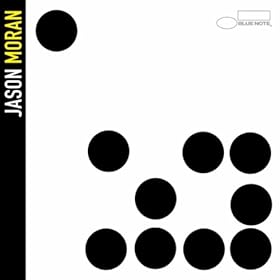
A throwback to the classic Blue Note album covers of the 1960s, with sans serif typography and a minimalist design. What's not to love?
The rest of my picks after the jump.
06 January 2011
Criticism
Via John Dickerson:
Reading this by Morgan Beis in The Smart Set:I couldn't have put it any better myself. I've lost my blogging momentum over the past few months (which happens about once or twice a year for me, it seems), but after reading that my sense of purpose is restored. More to come this weekend.
Criticism does not stand outside the work of art, but stands alongside, maybe even inside, the work of art, participating in the work in order to further express and tease out what the artist already put there. In this theory of criticism, we don't need the critic to tell us what is good or bad, to tell us what to like and dislike. We need the critic, instead, to help us experience. We need the critic in the way that we need a friend or a lover. We need the critic as a companion on a journey that is a love affair with the things of the world. Benjamin once referred to this form of criticism as "the first form of criticism that refuses to judge." The primary virtue of this kind of criticism is its inherent generosity. It wants to make experience bigger, it wants to make each work of art as rich as it can possibly be. Its sole medium, as Benjamin put it, is "the life, the ongoing life, of the works themselves."
I was reminded of this quote from Greil Marcus' from his new book on Bob Dylan:
"I was never interested in figuring out what the songs meant," writes Marcus, "I was interested in figuring out my response to them and other people's responses. I wanted to get closer to the music than I could by listening to it-- I wanted to get inside it, behind it."
One last thing about year-end lists
When compiling my own year-end compendium, I forgot one important fact: Francis Davis does the same thing for the Village Voice, and his ranking of albums culls from a larger list of critics than mine, so I must defer to him. Not that I mind letting someone else do the yeoman's work...
Subscribe to:
Posts (Atom)
Stats


